As reported on November 18, 2026, bitcoin had fallen 14% over the preceding week after six straight weekly losses. K33 research head Vetle Lunde argued that the selloff showed signs of a local bottom—not that a recovery was assured.
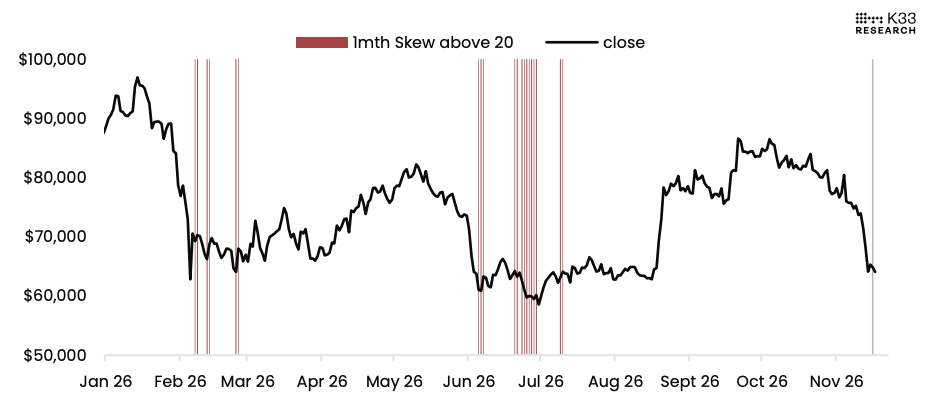
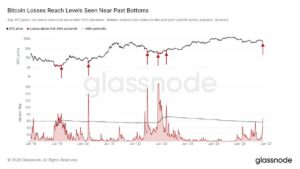
Lunde pointed to a daily relative strength index (RSI) reading of 19.95 on the preceding Saturday, bitcoin’s move below its 200-week moving average, and K33’s estimate that 51.5% of circulating bitcoin was held at a loss. K33 also reported negative funding rates, multi-year lows in leveraged ETF exposure, and unusually strong demand for options that protect against further declines. Lunde said similar conditions had historically appeared near local bottoms, but cautioned that past recoveries involved prolonged consolidation rather than an immediate rebound. His description of prices below $70,000 as a “gift from the market” was an investment judgment, not a confirmed floor.
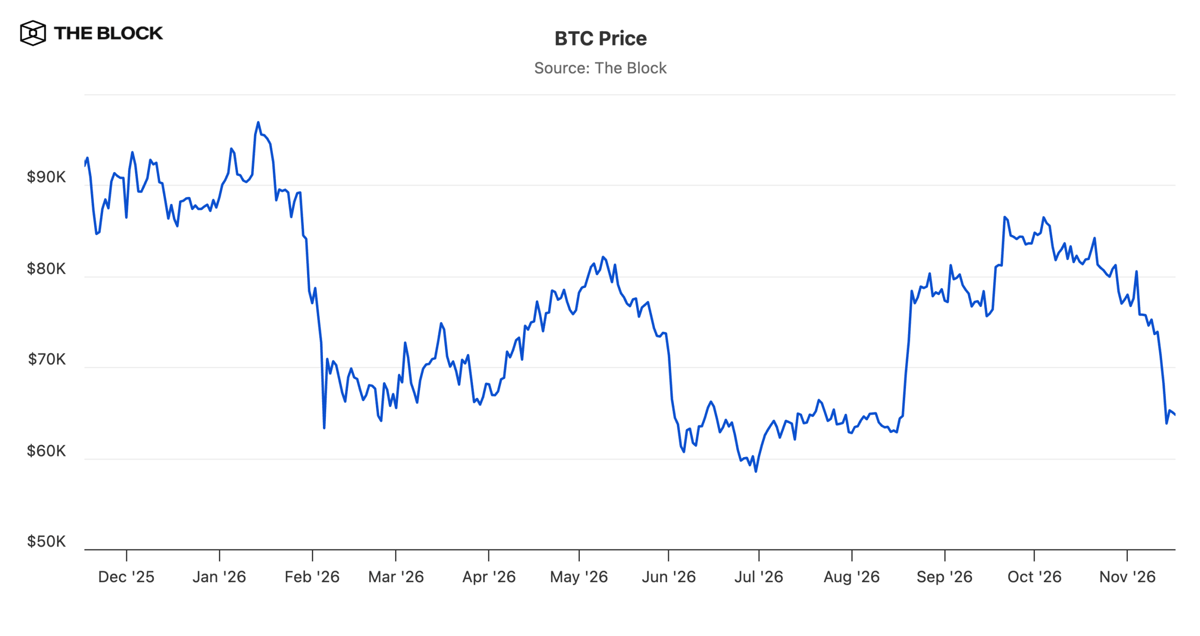
The downside remained concrete. Glassnode said short-term holders added about 66,000 BTC in the $62,000–$66,000 range during the two heaviest days of selling. It identified a daily close below $62,000 as a level that could put August buyers at a loss and open a path toward the June low near $58,500. Glassnode also noted a concentration of buy orders near $60,000 on Binance, while warning that traders could withdraw those orders.
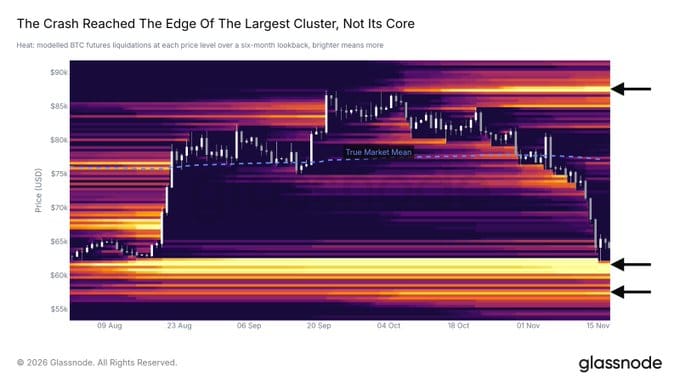
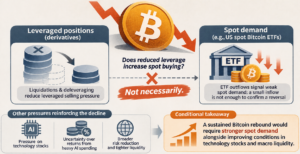
Bitwise chief investment officer Matt Hougan offered a separate explanation for the drop: a sharp change in expectations for Federal Reserve rates following the November 10 U.S. inflation report, amplified by thin weekend trading and roughly $2 billion in leveraged liquidations. He argued that markets had priced in aggressive rate hikes and much of the leverage had been cleared.
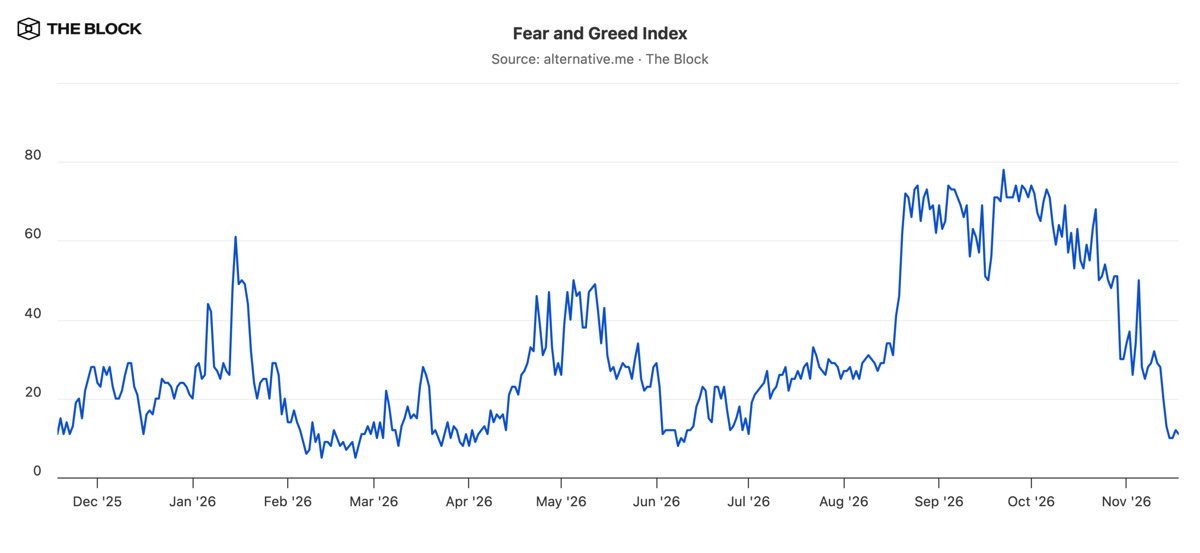
These readings describe positioning, sentiment and possible price levels as they stood on November 18. Historical similarities can help explain why analysts were watching for selling to ease; they cannot establish when—or whether—bitcoin would recover.