
As reported on November 14, 2026, Bitcoin had fallen to $66,971.49, down 11.55% for the week. That price raised a question for companies that hold large amounts of BTC: what changes when the market price drops below what they paid?
Strategy reported holding 850,364 BTC at an average cost of $75,456 per coin, following a purchase of 1,036 BTC on November 9. Using the report’s Bitcoin quote from November 14 at 02:44, those holdings were worth about $56.95 billion against a reported cost of about $64.17 billion—an unrealized difference of roughly $7.2 billion. It is a change in the market value of the holdings, not a realized loss from selling them.

The report also compared Strategy’s $47.14 billion equity market value with the $56.95 billion value of its Bitcoin, producing a ratio of about 0.83. That simple comparison shows why issuing shares to buy more BTC may look less attractive when the stock trades below the value of the coins held. It is not a full measure of the company’s net asset value: the calculation does not account for liabilities, other assets or the terms of its financing.
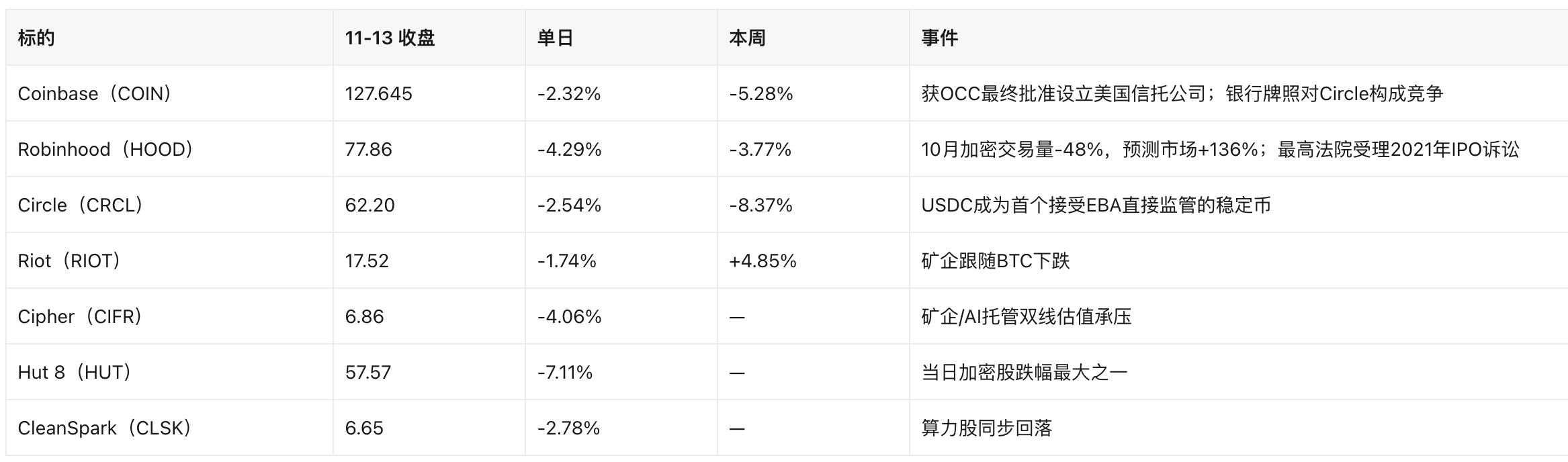
The pressure was not confined to treasury stocks. The report recorded $185 million in net outflows from U.S. spot Bitcoin ETFs on November 13, the seventh consecutive trading day of net outflows. Coinbase Institutional attributed the wider Bitcoin decline chiefly to expectations of higher Federal Reserve rates; that is its assessment, not a demonstrated single cause of the price move.

A falling BTC price can therefore affect a treasury company twice: it reduces the market value of its holdings and may make further share-funded purchases harder. Whether either pressure persists depends on future prices, financing conditions and investor demand—none of which the cost-basis comparison can predict.