
In reporting published on November 17, 2026 (UTC+8), Bitcoin had recovered to about $64,300 early Monday after falling to roughly $62,100 on Sunday—its lowest level since July 14. The question was whether that rebound marked a change in direction after six consecutive weeks of losses.
The weekend sell-off forced the closure of roughly $2 billion in crypto derivatives positions, mostly bets on rising prices. CoinGlass figures for a 24-hour period on Saturday put liquidations at $1.9 billion, including about $1.8 billion in bullish positions across cryptocurrencies, not Bitcoin alone. A liquidation occurs when an exchange closes a leveraged position because the funds backing it can no longer cover its losses.
Demand had also weakened before the weekend. Decrypt’s ETF tracker showed $185.4 million in net outflows from U.S. spot Bitcoin ETFs on Friday, the seventh consecutive trading session of outflows. Withdrawals since November 5 totaled approximately $1.91 billion. Friday’s figures included $143.5 million from BlackRock’s IBIT and $41.9 million from Fidelity’s FBTC. ETF flow totals measure fund creations and redemptions, not every trade between investors. Because U.S. ETFs do not trade on weekends, those figures do not show shareholders redeeming during Sunday’s fall.
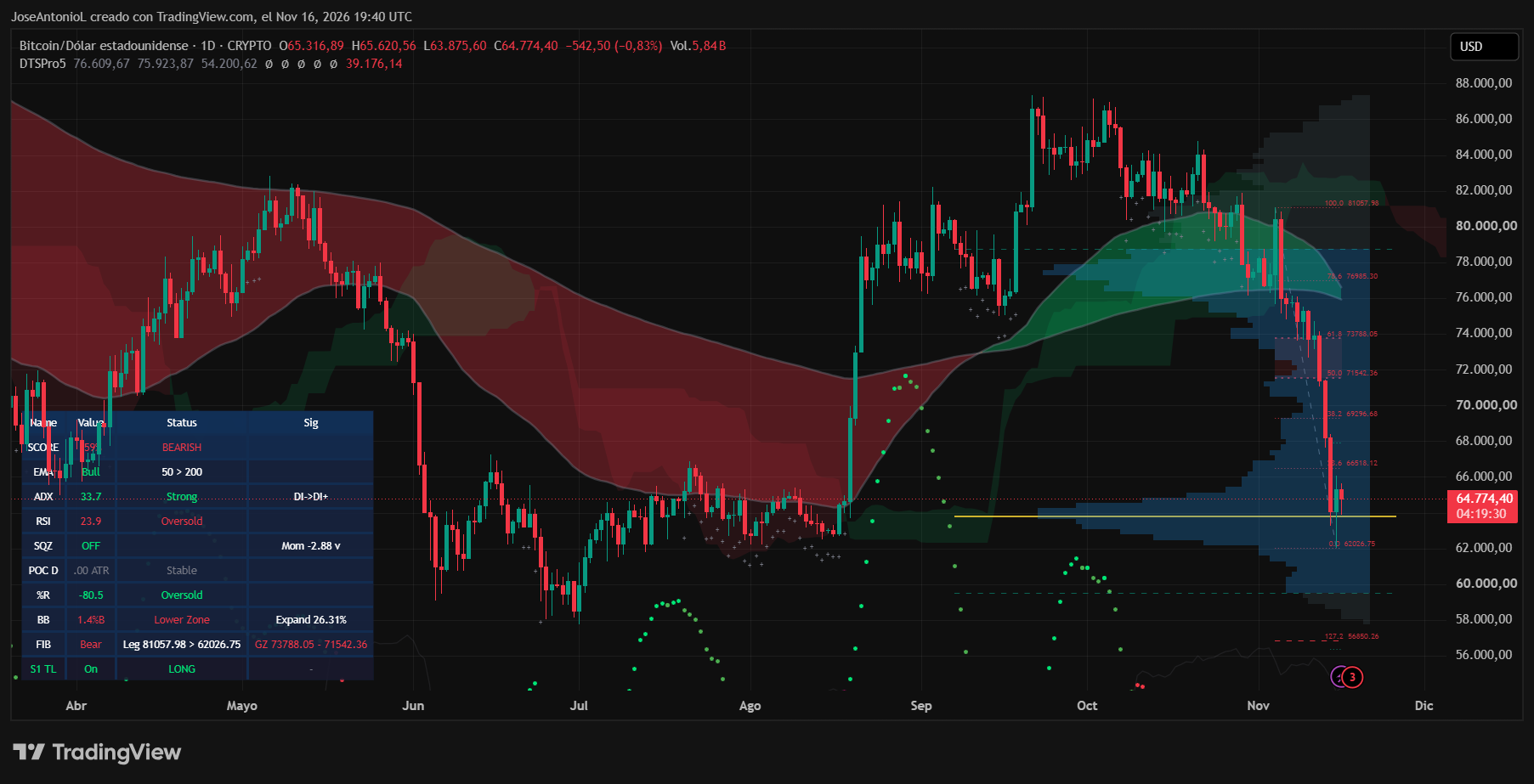
The chart showed Bitcoin bouncing near $62,000. A decisive move below that area would put $60,000 back in focus, where options traders had accumulated significant downside exposure. The November 27 options expiration was still ahead, with $50,000 puts among the contracts seeing the most recent trading activity.
An oversold daily RSI near 24 suggested the decline might be stretched, but it did not establish a bottom. The ADX above 33 still indicated a strong prevailing trend with bearish pressure dominant. Neither an indicator nor a chart level can determine what happens next; Monday’s ETF flows and demand for downside protection remained open questions in the original report.