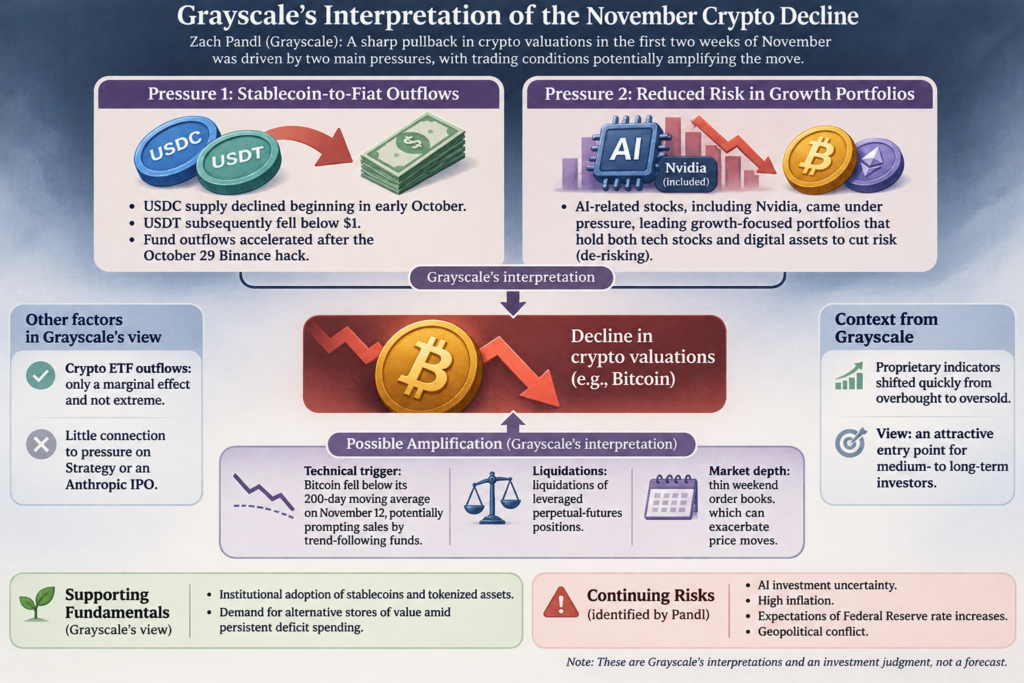
In reporting published on November 17, 2026, Grayscale research head Zach Pandl said Bitcoin had briefly fallen to $62,000 during a sharp decline in crypto valuations in the first two weeks of November. His explanation centered on two pressures: money leaving stablecoins for fiat, and growth-focused portfolios cutting risk as AI-related stocks, including Nvidia, came under pressure.
Pandl pointed to a decline in USDC supply beginning in early October and said USDT subsequently fell below $1. He also cited faster fund outflows after what the report described as an October 29 hack of Binance. These are his proposed drivers of the decline, not independently established causes.
Trading conditions may have amplified the move. Bitcoin fell below its 200-day moving average on November 12, potentially prompting sales by trend-following funds. Pandl also cited liquidations of leveraged perpetual-futures positions and thin weekend order books. In Grayscale’s assessment, crypto ETF outflows had only a marginal effect and were not extreme; the firm saw little connection to pressure on Strategy or an Anthropic IPO.
Pandl said Grayscale’s proprietary indicators had shifted quickly from overbought to oversold. He viewed prices as an attractive entry point for medium- to long-term investors, citing institutional adoption of stablecoins and tokenized assets and demand for alternative stores of value amid persistent deficit spending. That remains an investment judgment, not a forecast: he also identified uncertainty around AI investment, high inflation, expectations of Federal Reserve rate increases and geopolitical conflict as continuing risks.