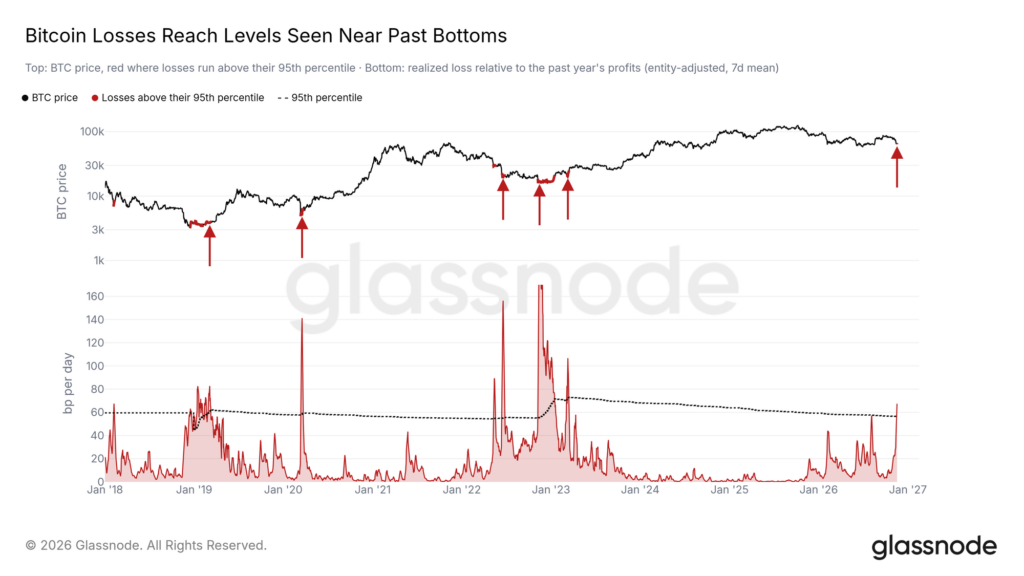
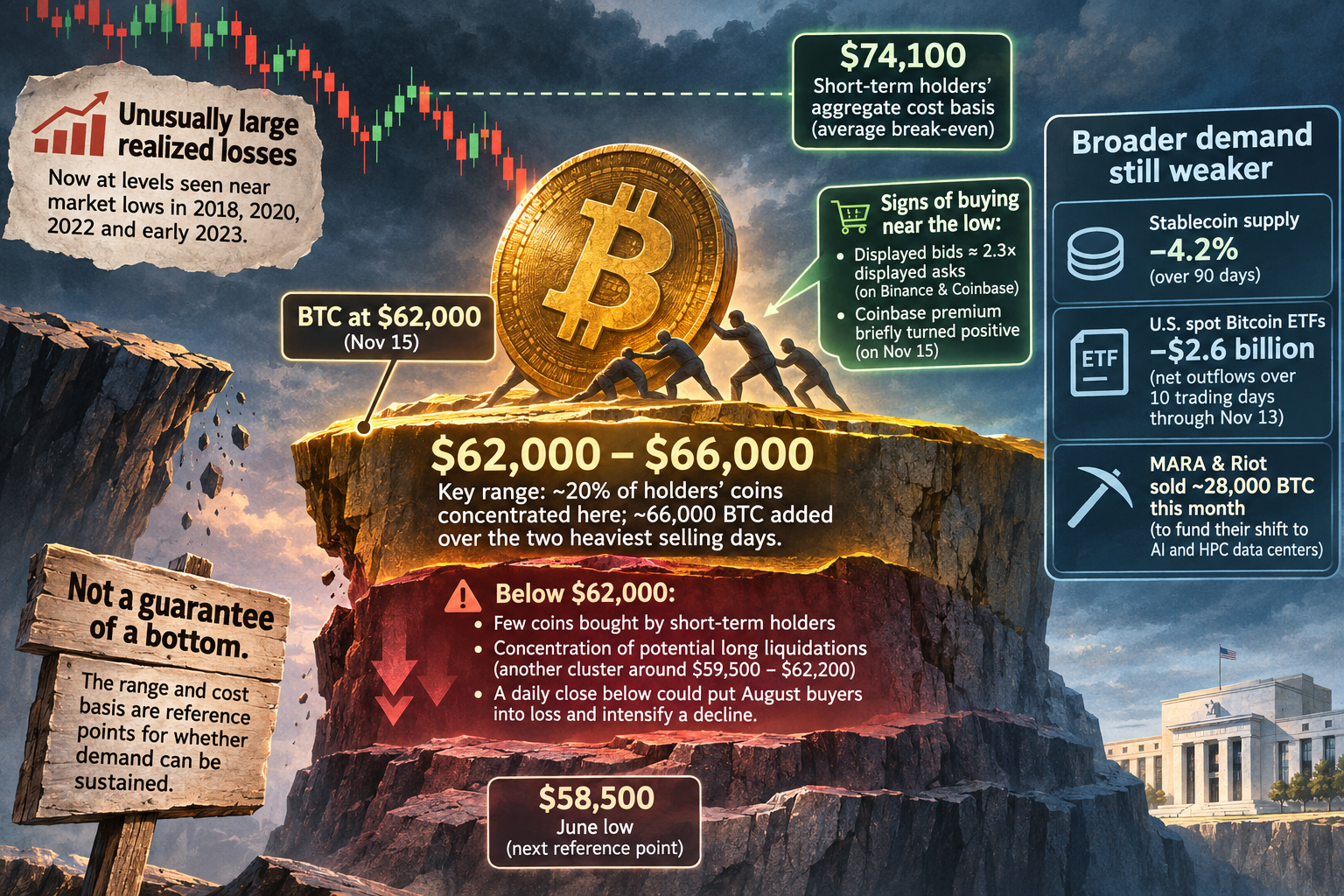
As reported on November 18, 2026, Bitcoin’s fall to $62,000 on November 15 had produced unusually large realized losses. Glassnode’s comparison of losses with profits realized over the preceding year had reached levels previously seen near market lows in 2018, 2020, 2022 and early 2023. That is evidence of heavy selling at a loss, not proof that a bottom is in.
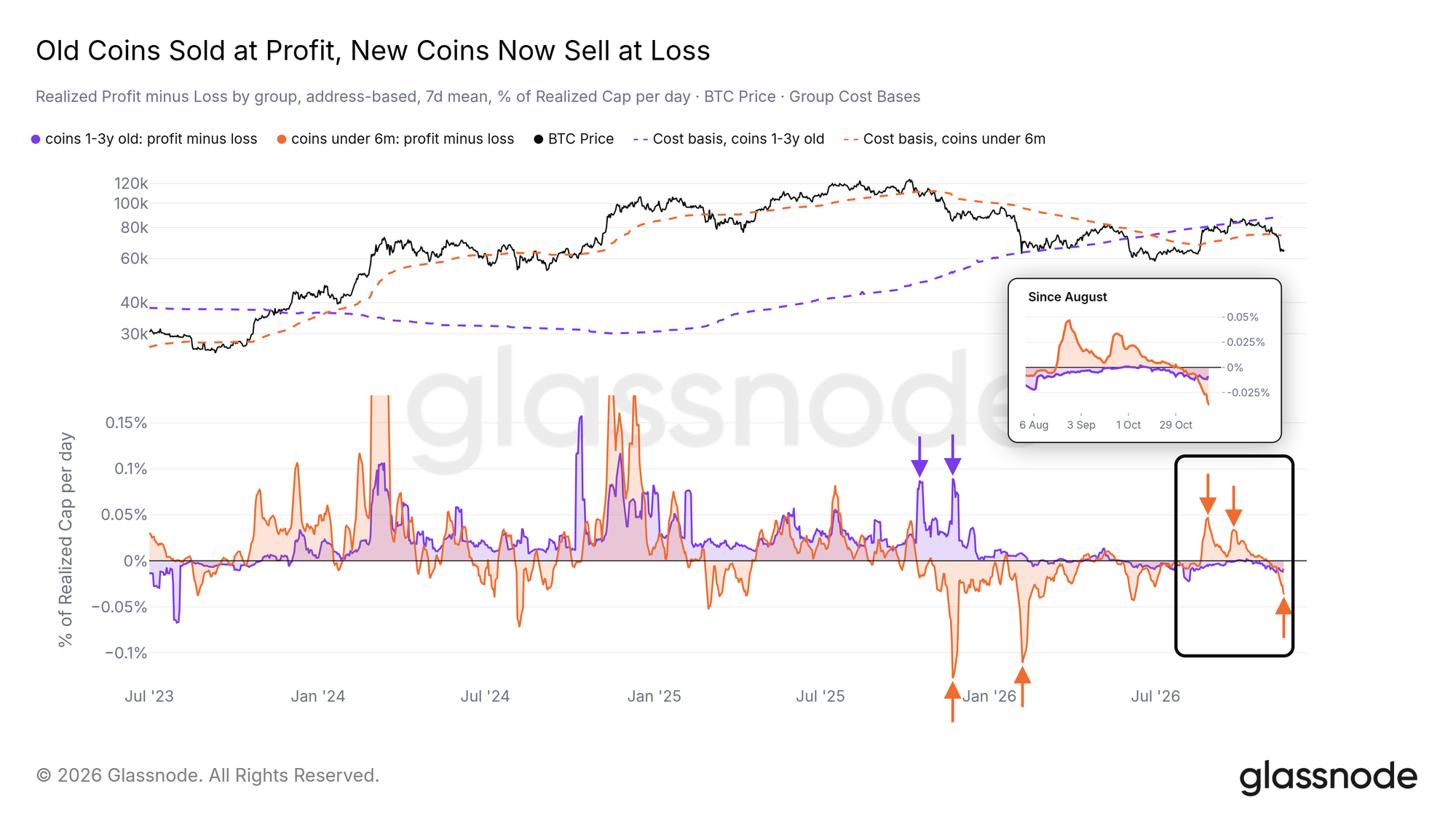
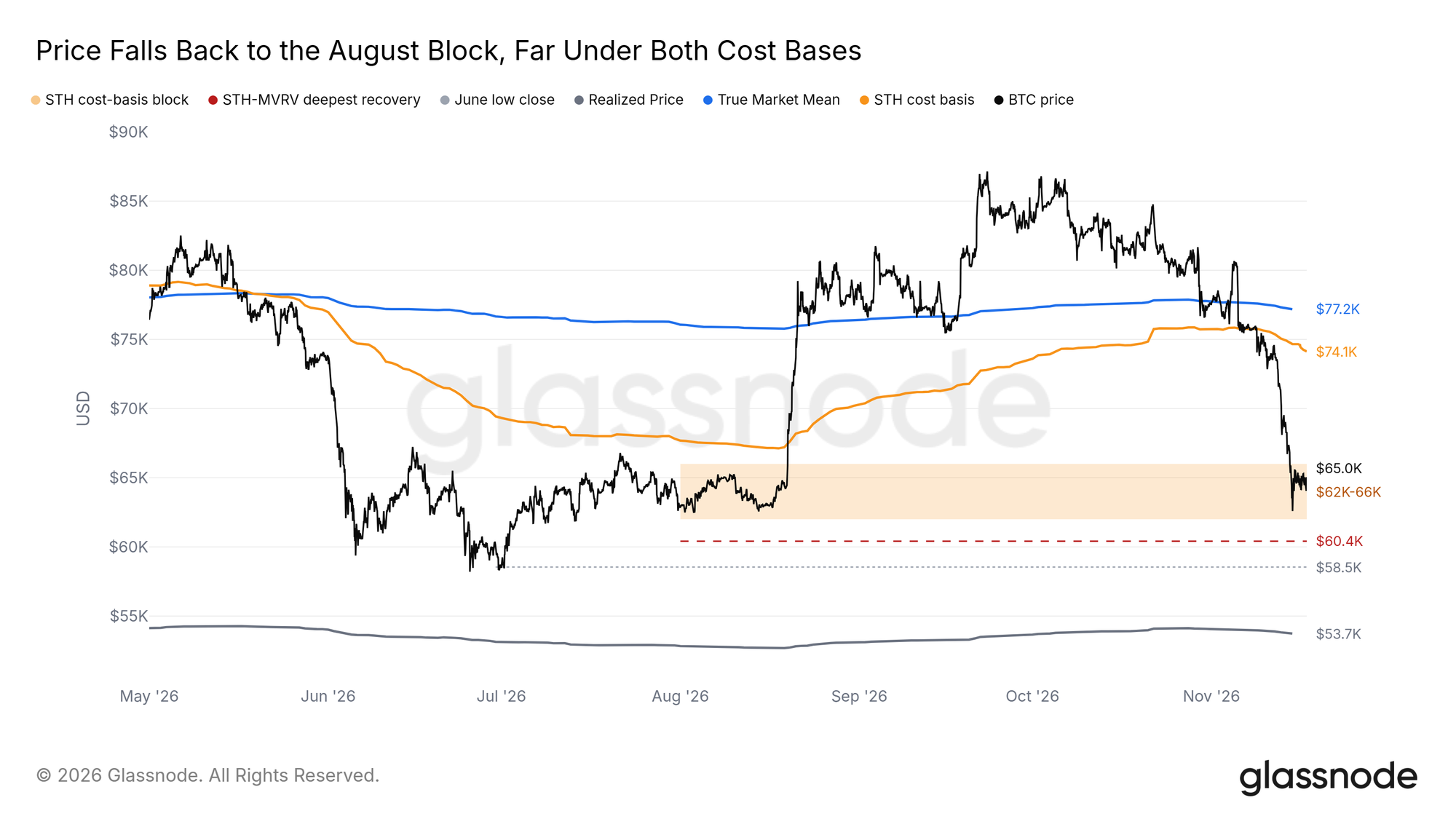
Why does the $62,000–$66,000 range matter?
Glassnode identified this range, around the August low, as the main concentration of recent buyers below the price before the drop. It estimated that roughly one-fifth of holders’ coins were concentrated there and that the area gained about 66,000 BTC during the two heaviest days of selling. Buyers were present, but their purchases do not guarantee the range will hold.
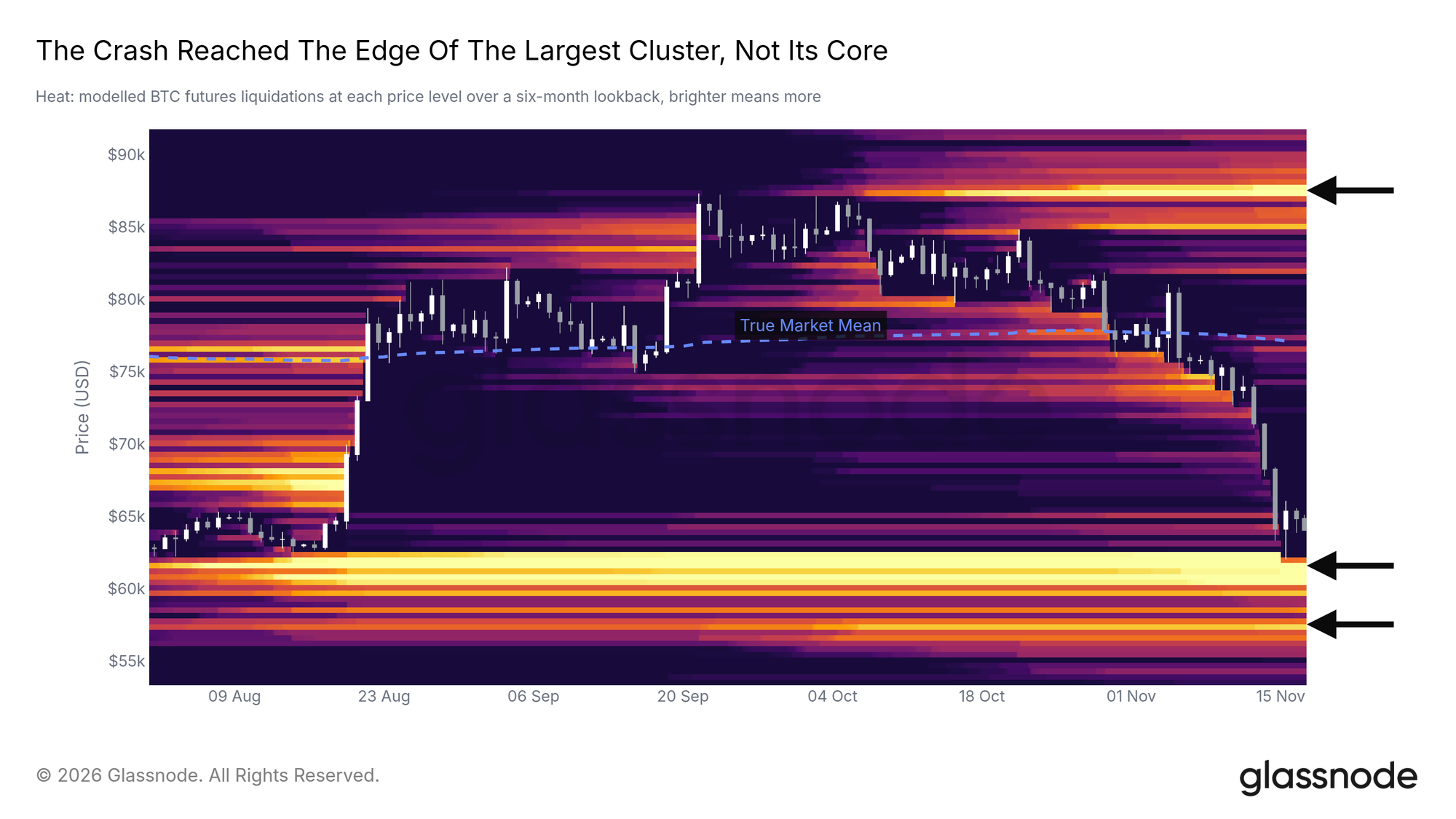
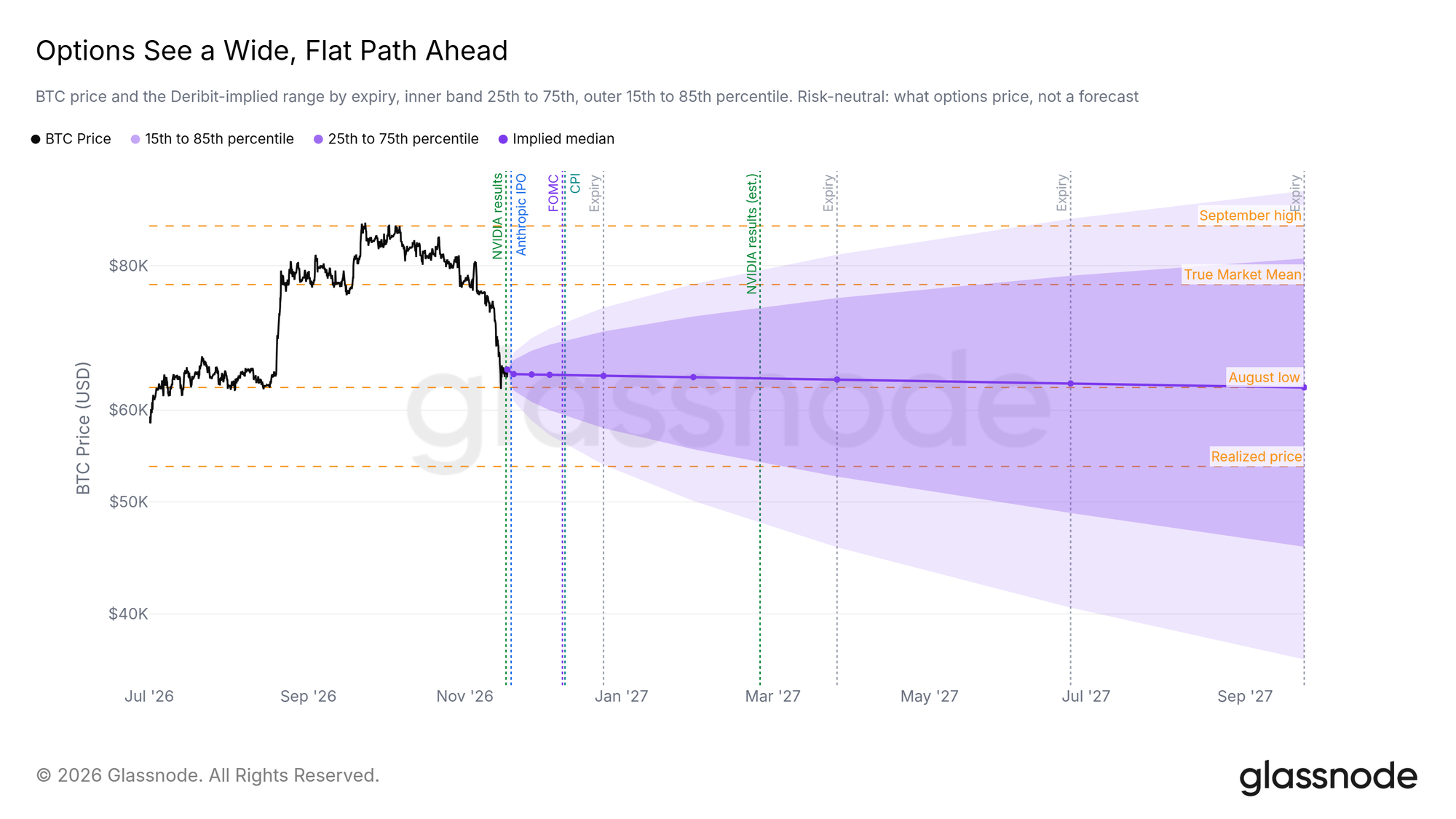
Below $62,000, Glassnode found relatively few coins bought by short-term holders and a concentration of potential long liquidations. It argued that a daily close below the range could put August buyers into loss and intensify a decline. The June low of $58,500 was its next reference point. Above the market, $74,100 was the short-term holders’ aggregate cost basis—a level at which that group would, on average, break even.
Some immediate pressure had already passed. Glassnode reported that November 13 and 14 saw some of the largest long liquidations since 2023 when measured against open interest. Its liquidation map suggested that most leveraged longs above $62,000 had been cleared, though another cluster remained around $59,500–$62,200. Such maps model possible forced sales; they do not predict where price will go.
What would show stronger demand?
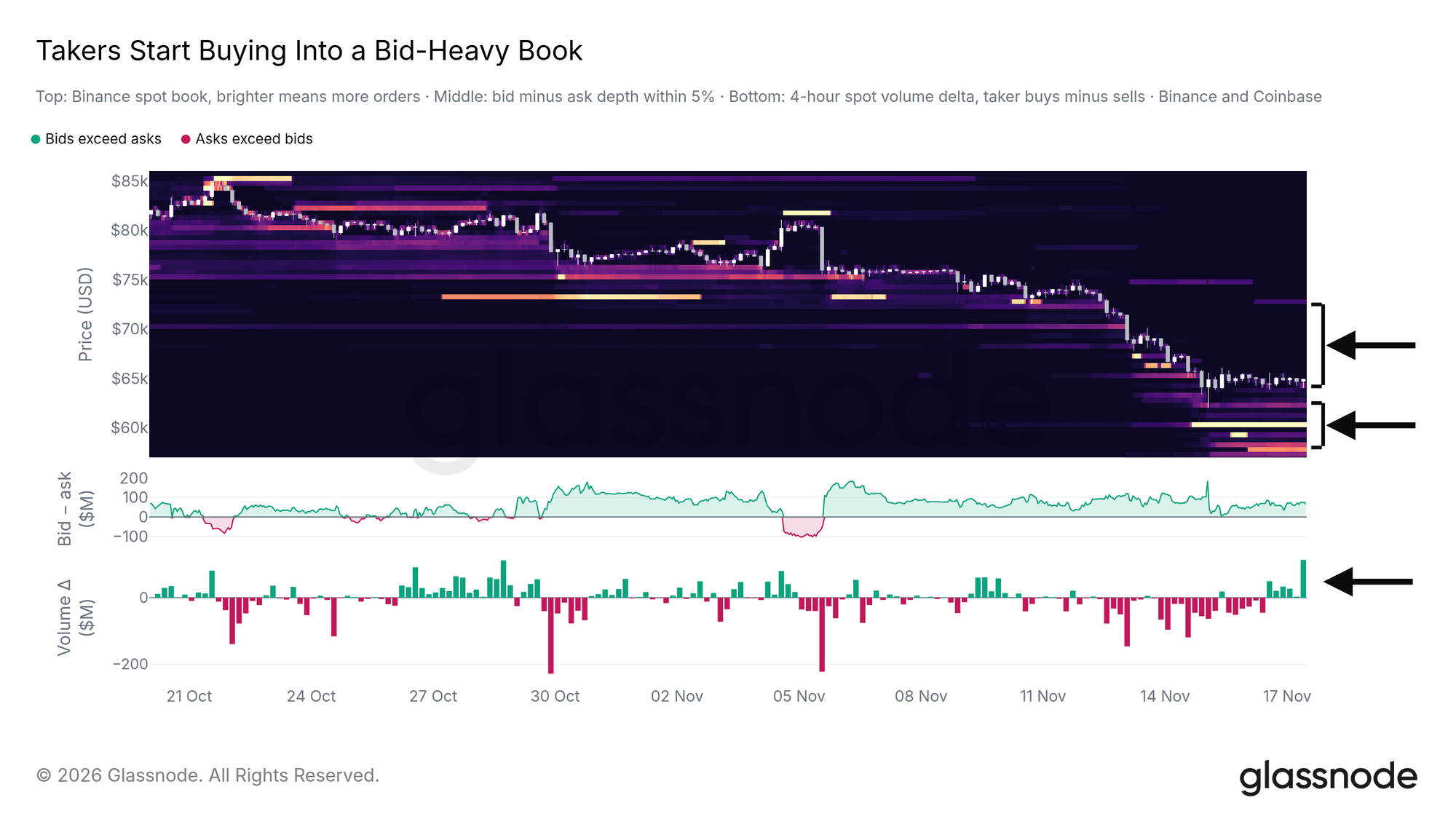
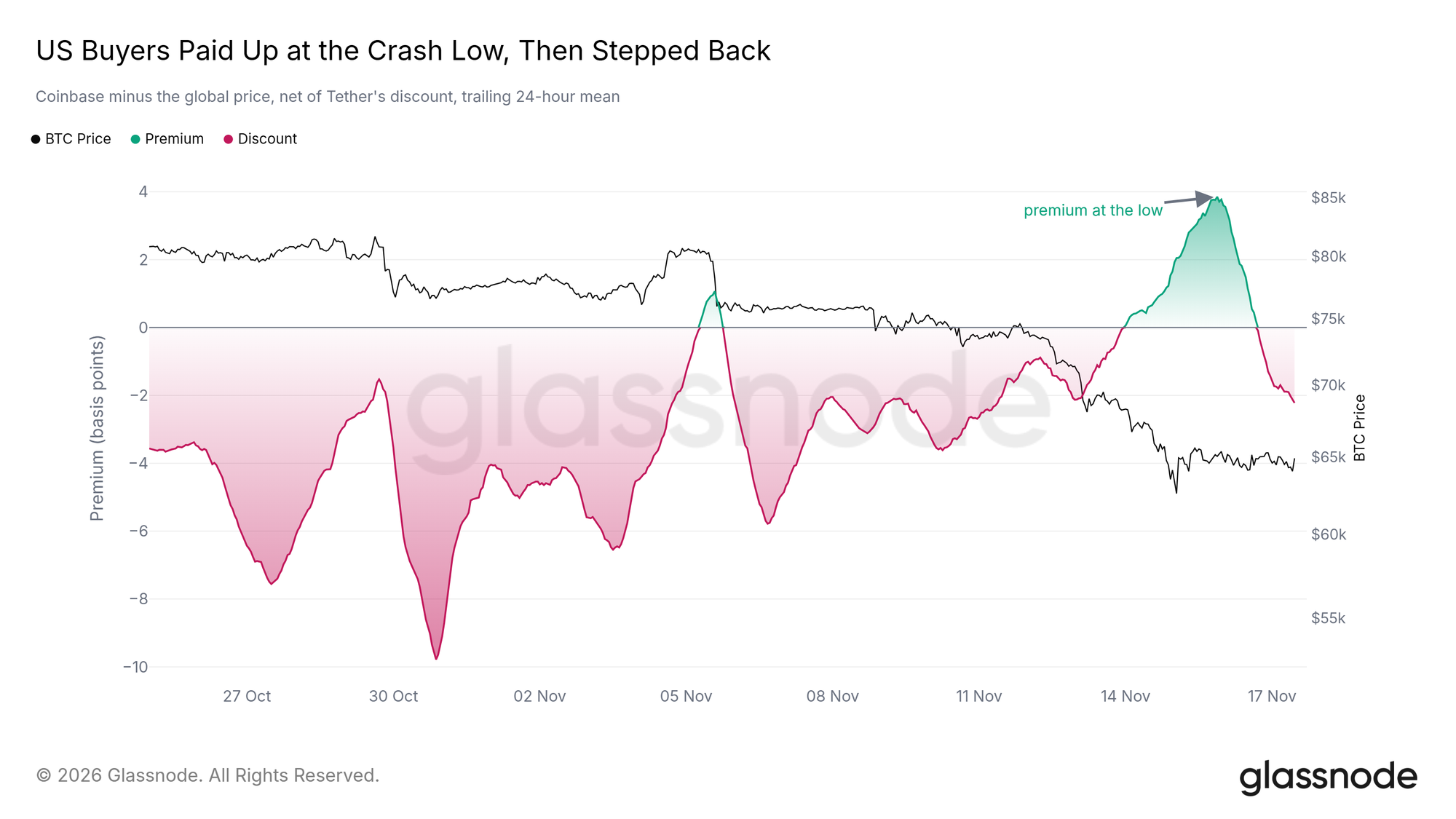
There were signs of buying near the low. Glassnode said displayed bids within 5% of the price on Binance and Coinbase were about 2.3 times displayed asks. The Coinbase premium briefly turned positive on November 15 after being negative almost hourly since late October. But orders can be canceled, and the premium subsequently returned to a slight discount.
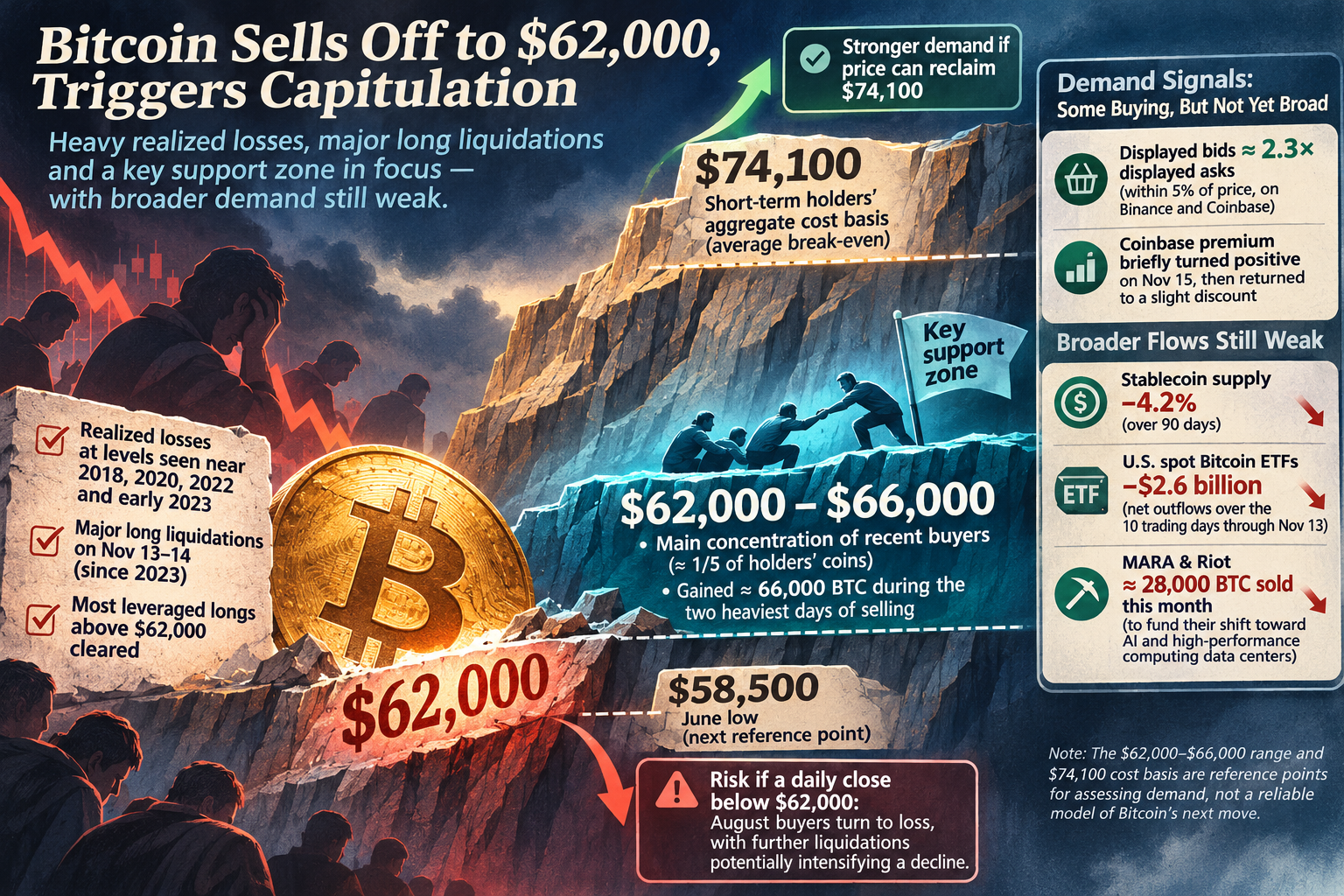
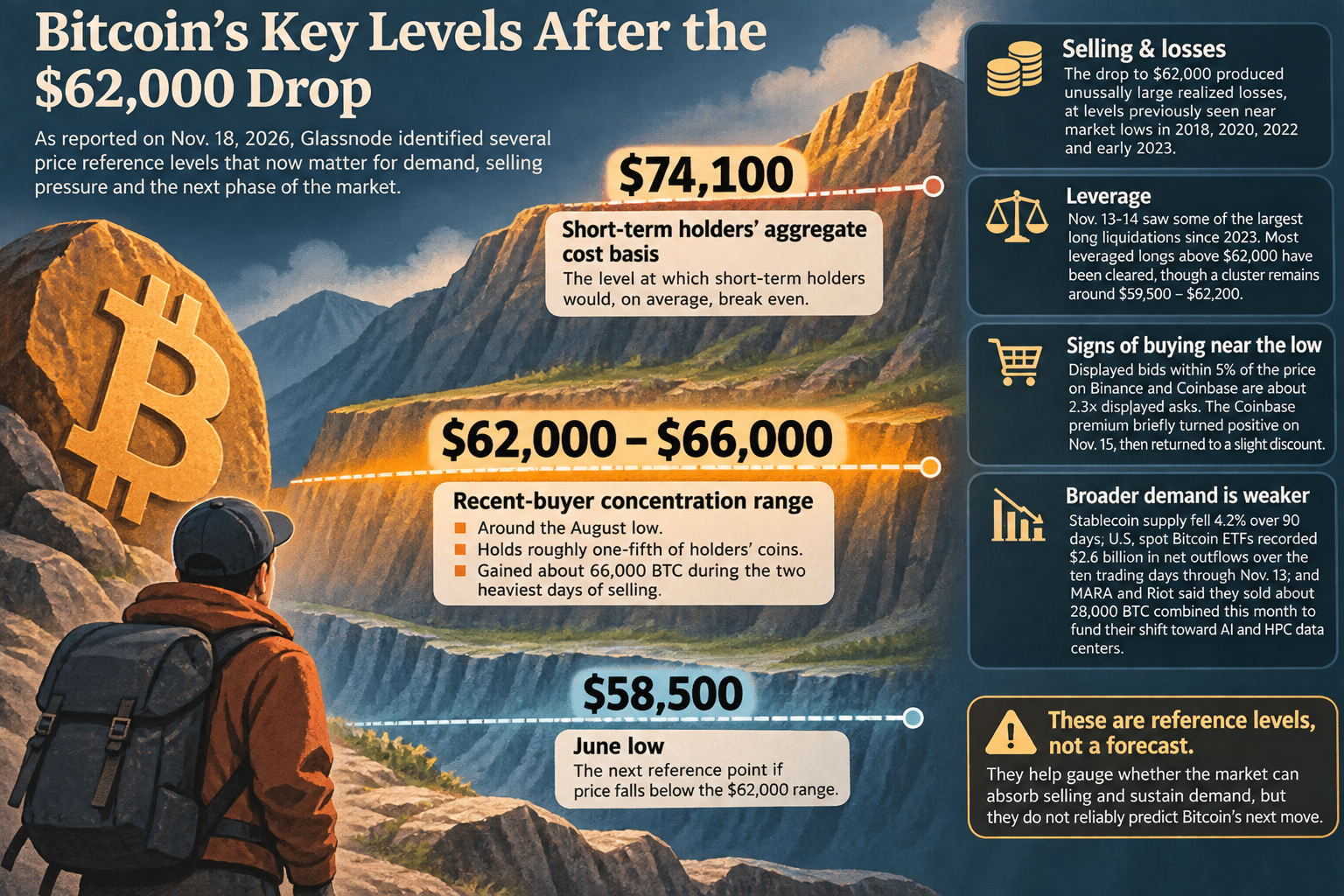
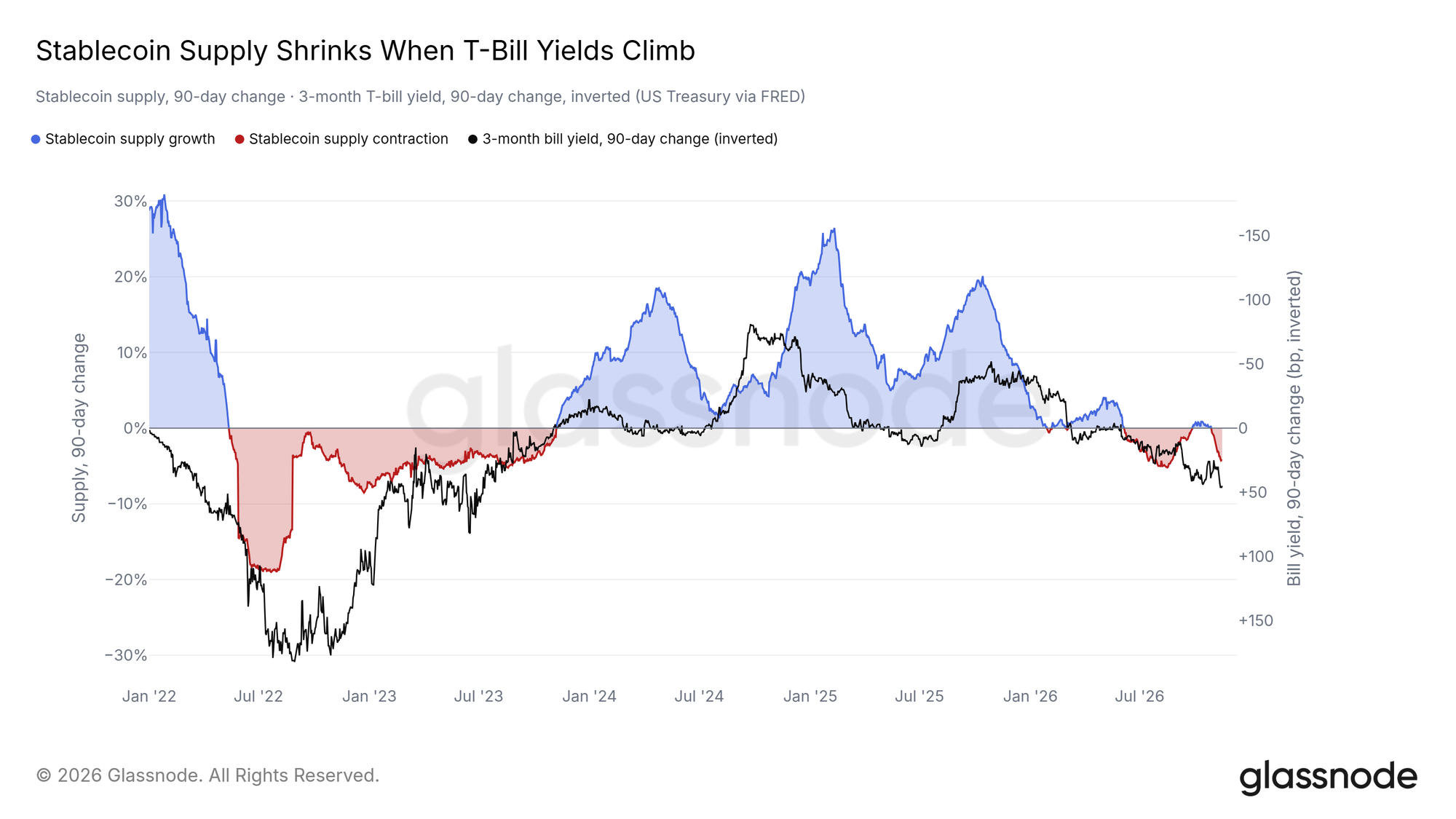
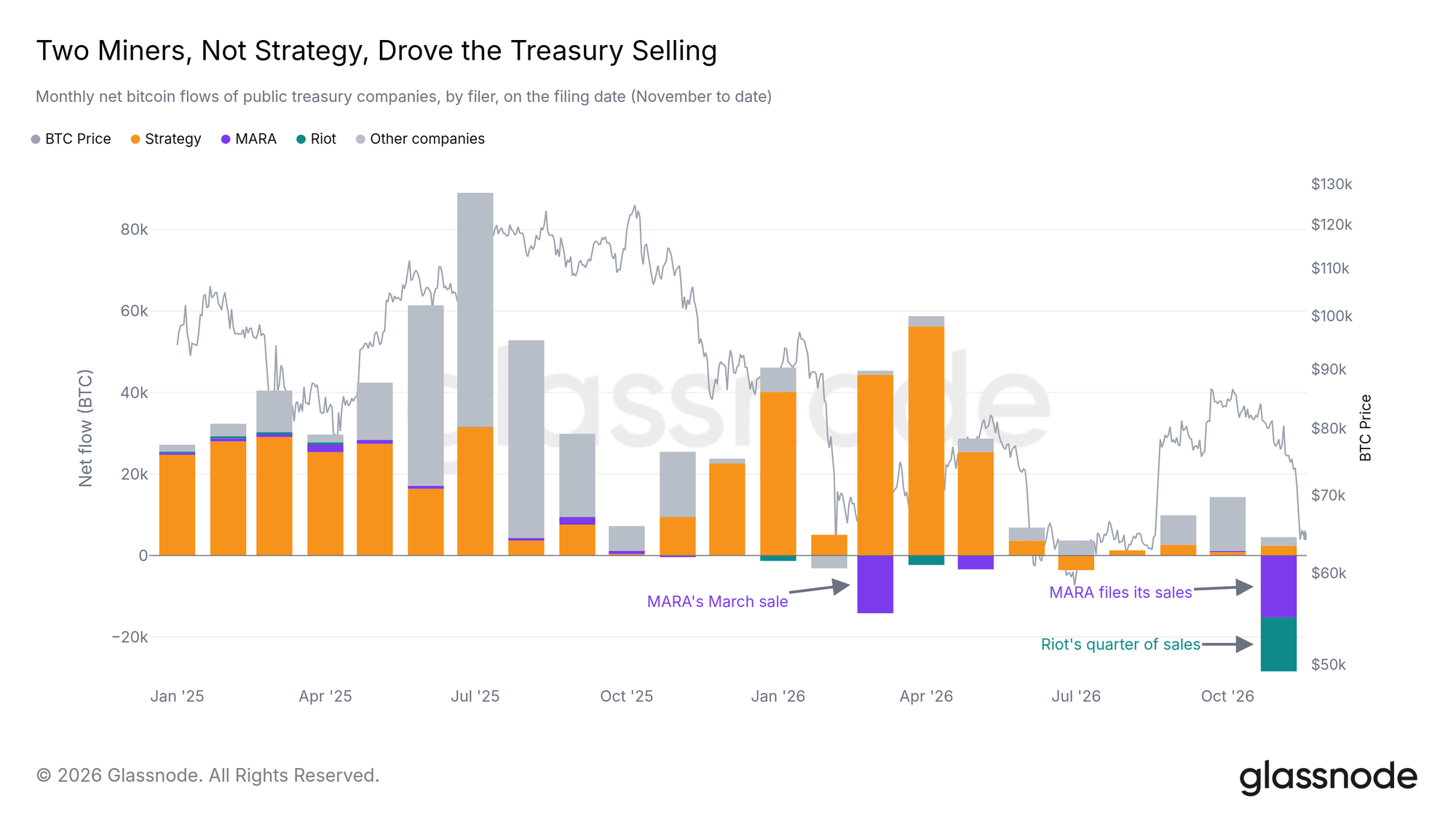
Broader measures were weaker. Stablecoin supply had fallen 4.2% over 90 days, while U.S. spot Bitcoin ETFs recorded $2.6 billion in net outflows over the ten trading days through November 13. Glassnode also reported that MARA and Riot said they had sold about 28,000 BTC combined that month to fund their shift toward AI and high-performance computing data centers; other Bitcoin treasury companies were net buyers in November.
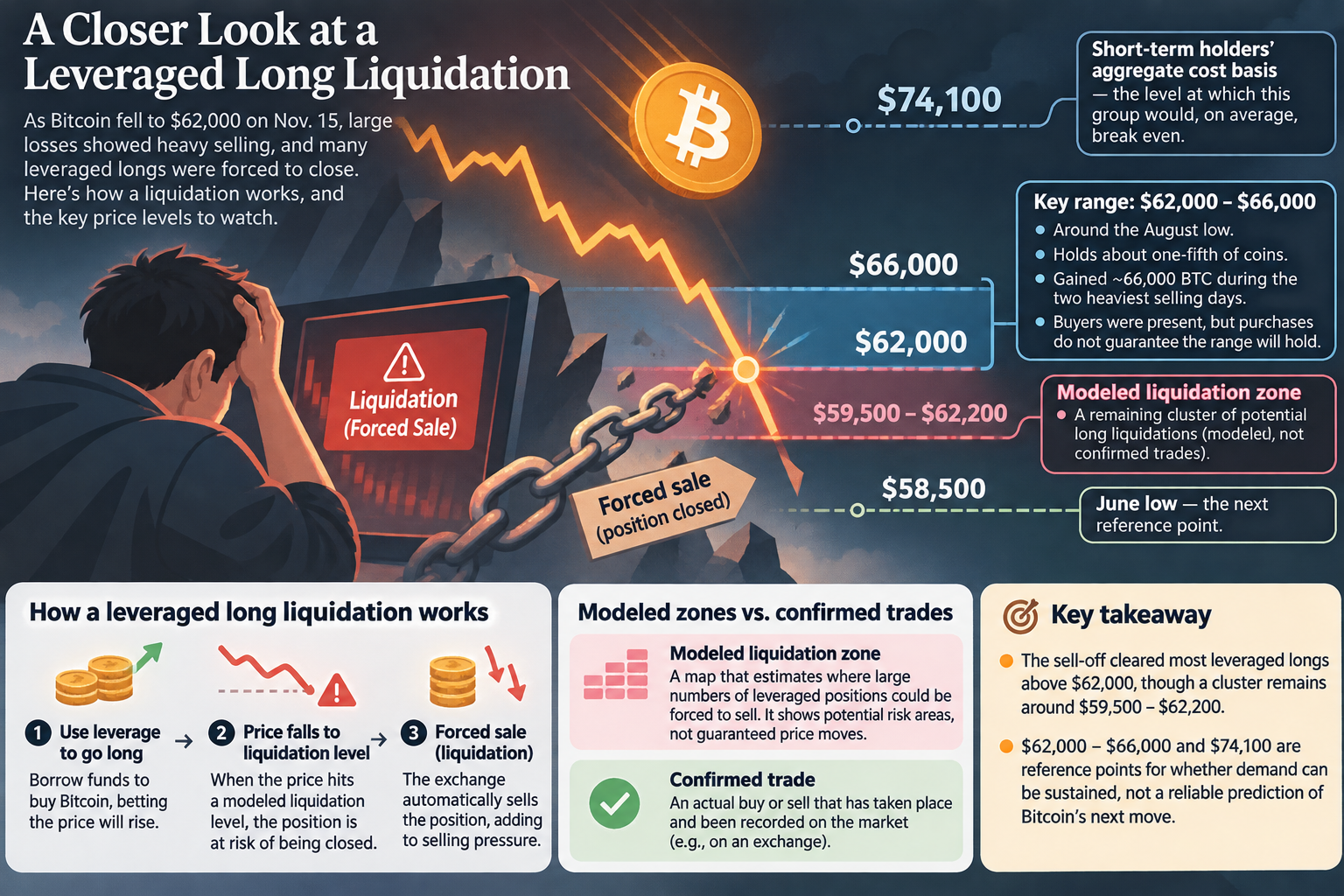

The distinction is between absorbing one sharp sell-off and sustaining demand afterward. The $62,000–$66,000 range and $74,100 cost basis offer reference points for that question, not a reliable model of Bitcoin’s next move.