
As of the original report’s publication on November 19, 2026 (UTC+8), CryptoQuant described bitcoin as being in a bearish phase while also trading in what it called a “value zone.” The distinction matters: the firm’s measure suggested traders were holding losses, not that the decline had ended.
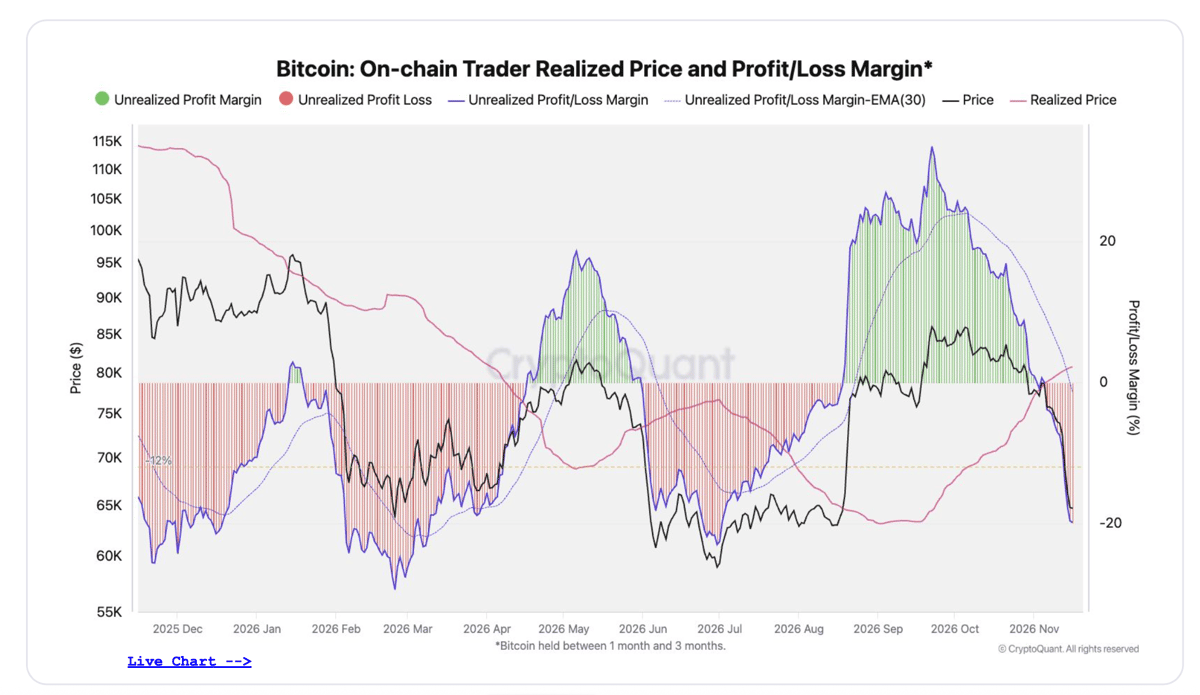
Bitcoin had fallen to about $61,000 on November 15, a four-month low that erased gains from a rally beginning August 19, CryptoQuant said. It was trading around $62,500 at the time of the report, below its 200-day and 365-day moving averages of $72,900 and $75,900. CryptoQuant research head Julio Moreno said those averages, previously support levels, had become resistance.
CryptoQuant said 30-day total bitcoin demand growth, including spot and perpetual futures, had fallen below −400,000 BTC—its weakest reading since the start of July. Holders had also realized a net loss of 25,800 BTC during the sell-off, which the firm said was the largest daily reading since July 13. Its Bull Score Index stood at 10 out of 100, while its analyst consensus index showed 58% bullish on bitcoin, down from 77% on October 7.
The “value zone” label came from traders’ unrealized profit/loss margin reaching −20%, its most negative level since July 1. Moreno cautioned that this meant bitcoin was cheap relative to traders’ cost basis, not that the decline was over. CryptoQuant also identified $62,000–$65,000 as a range where long-term holders had sold heavily and new investors had bought; it suggested those buyers might help support the range. That possibility remains a limitation of the model, not a confirmed price floor.