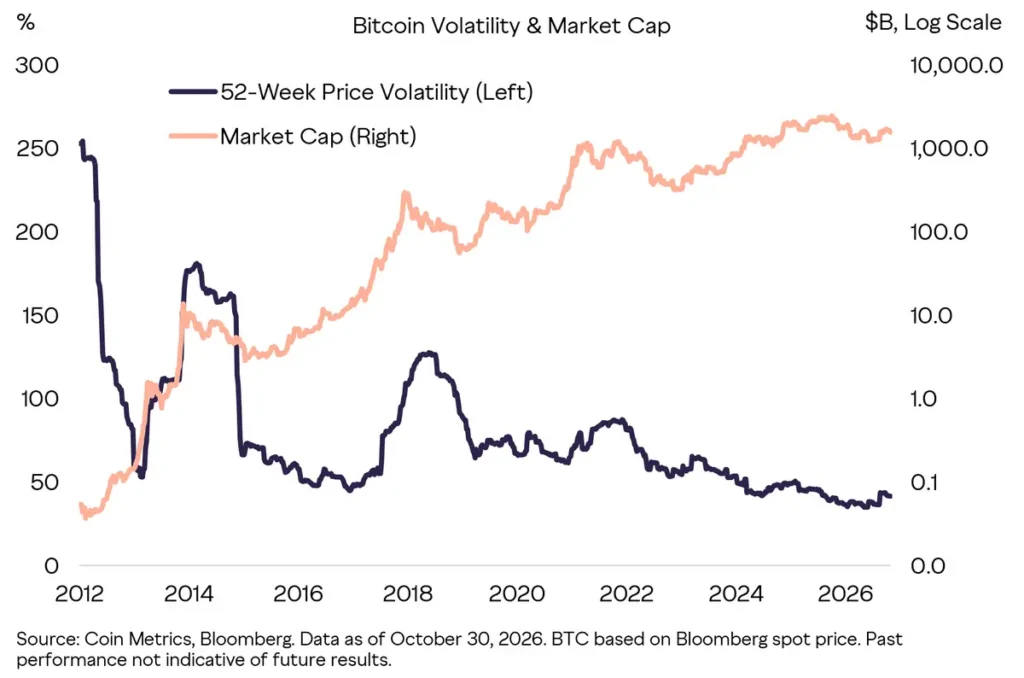
As reported on November 20, 2026, Grayscale researchers Zach Pandl and Charlie Perkins argued that Bitcoin should not be assessed using its early-market volatility alone. Their central distinction is between the size of Bitcoin’s price moves and the effect a Bitcoin holding might have on a broader portfolio. The first can be measured on its own; the second depends on how Bitcoin moves alongside other assets.
A different scale of volatility
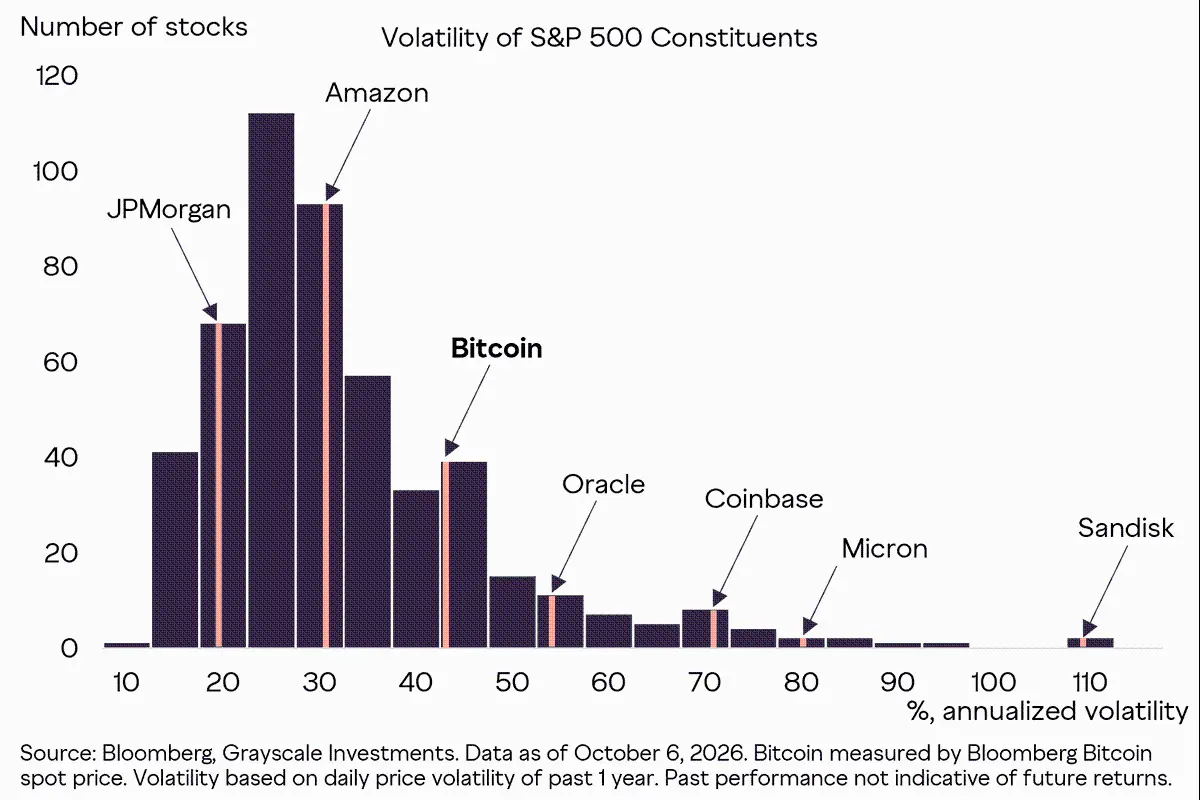
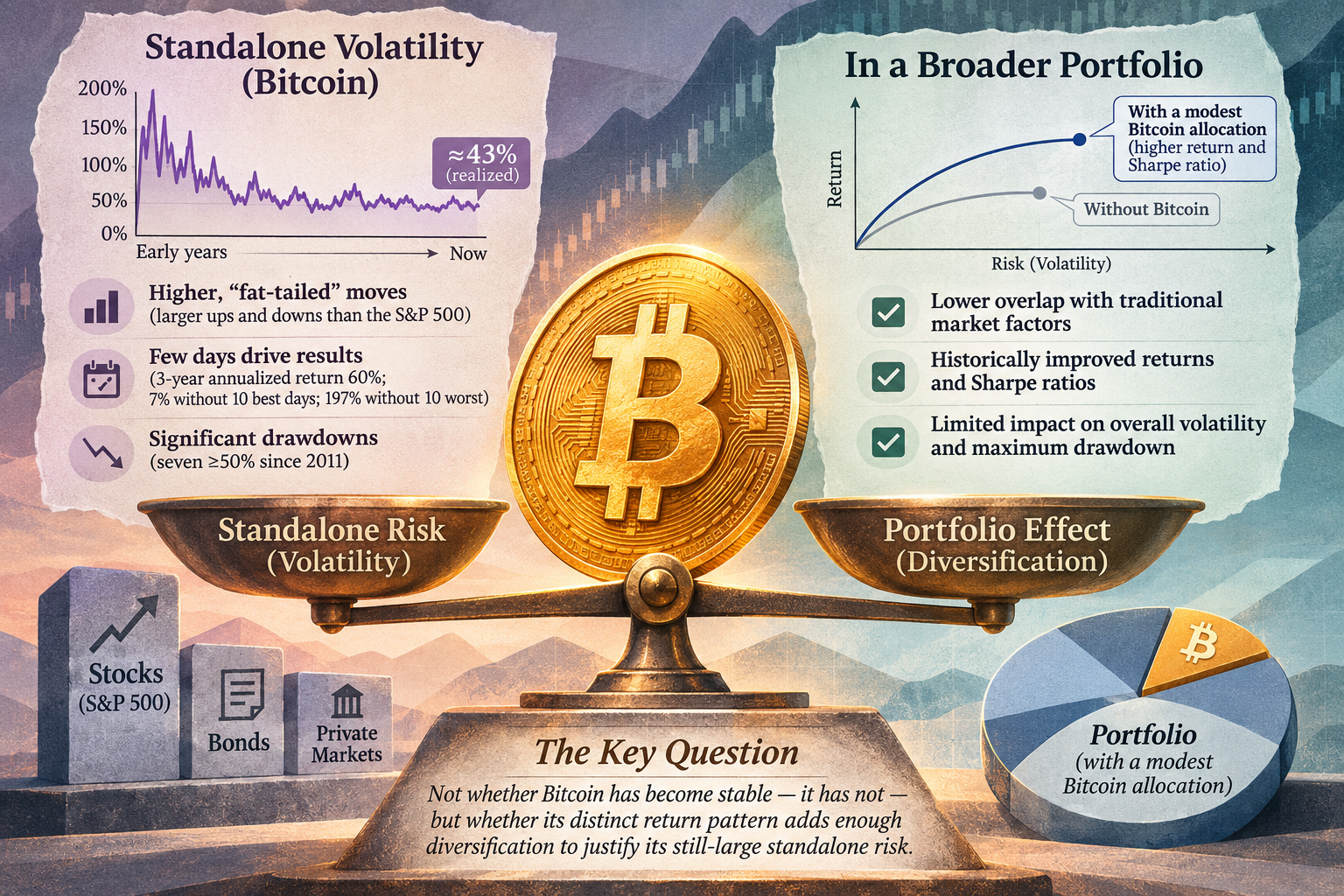
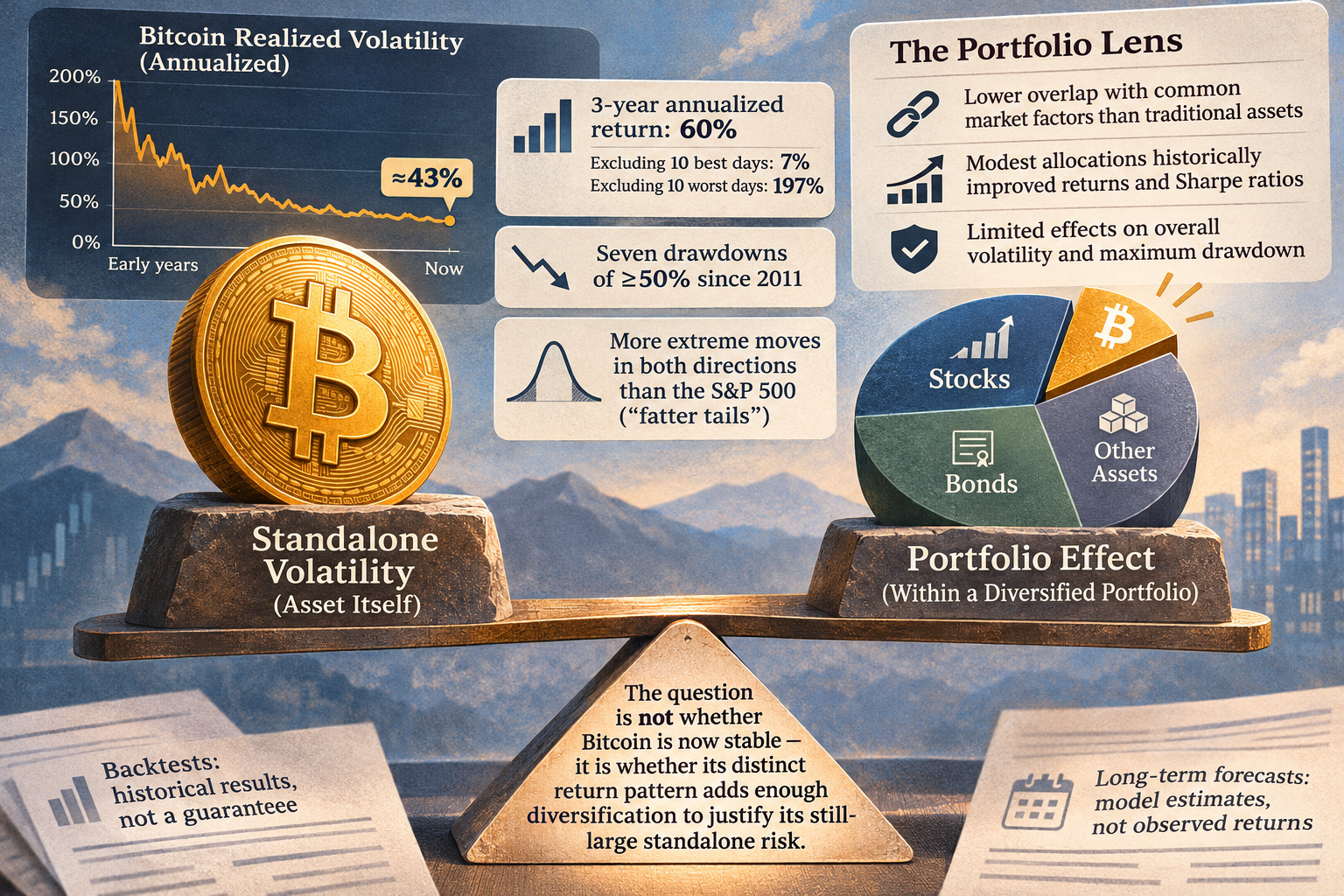
Grayscale put Bitcoin’s realized volatility in the mid-40% range, far below the triple-digit levels seen in its early years. At roughly 43%, it remained more volatile than most S&P 500 constituents, but less volatile than about 19% of them, according to the report’s comparison using Bloomberg data as of October 6, 2026. That places Bitcoin within the range of large US stocks—not in the category of low-risk assets.
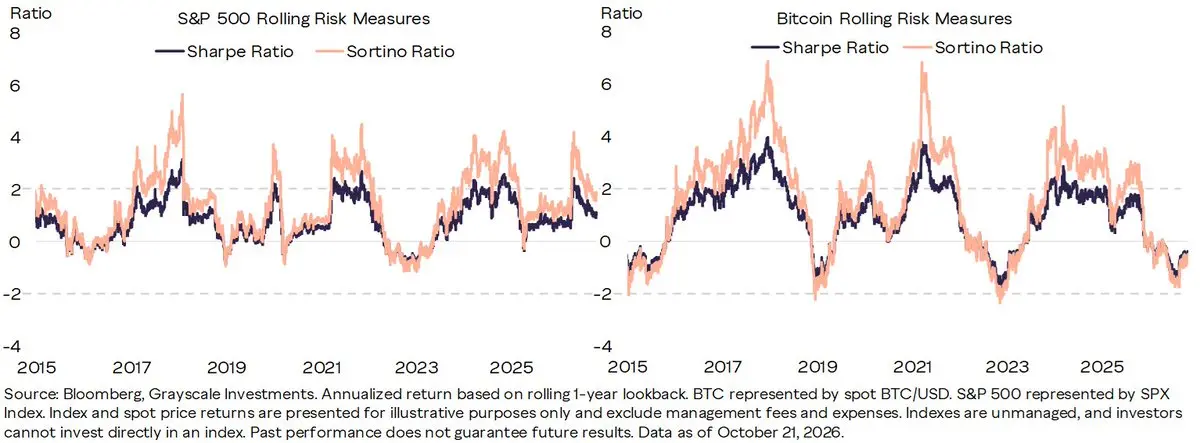
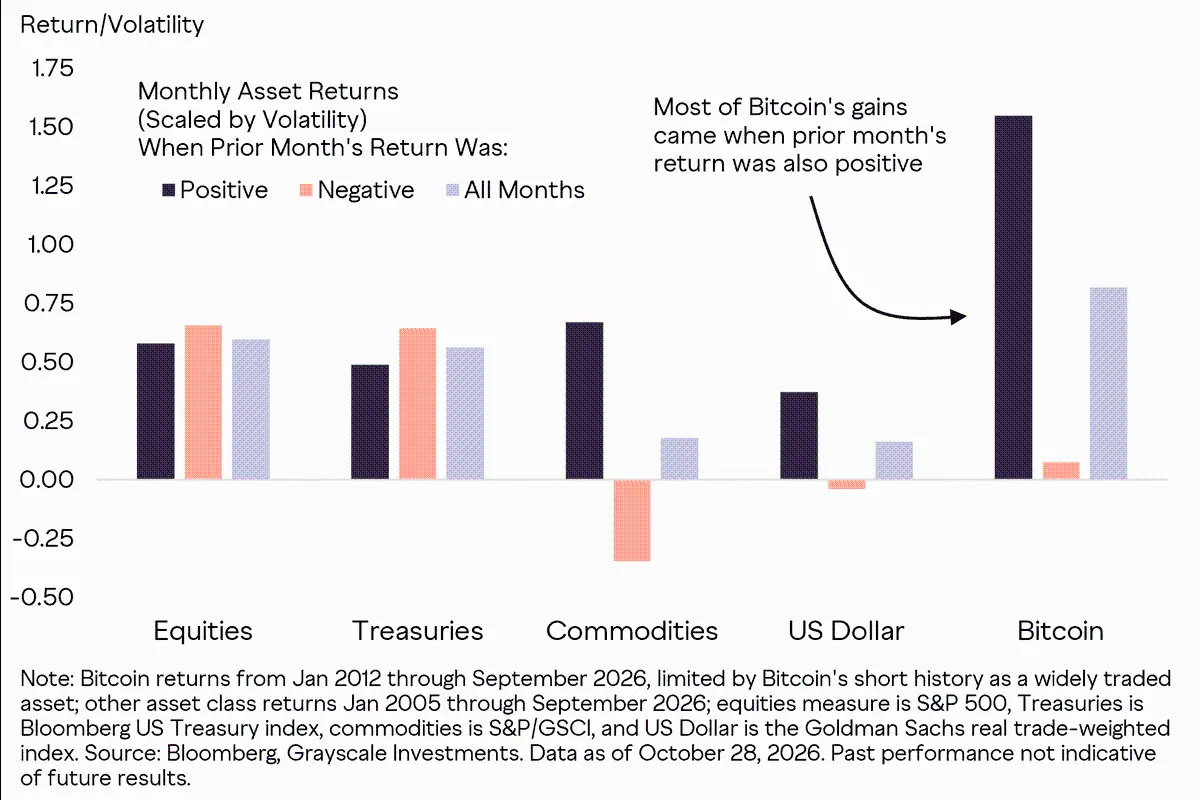
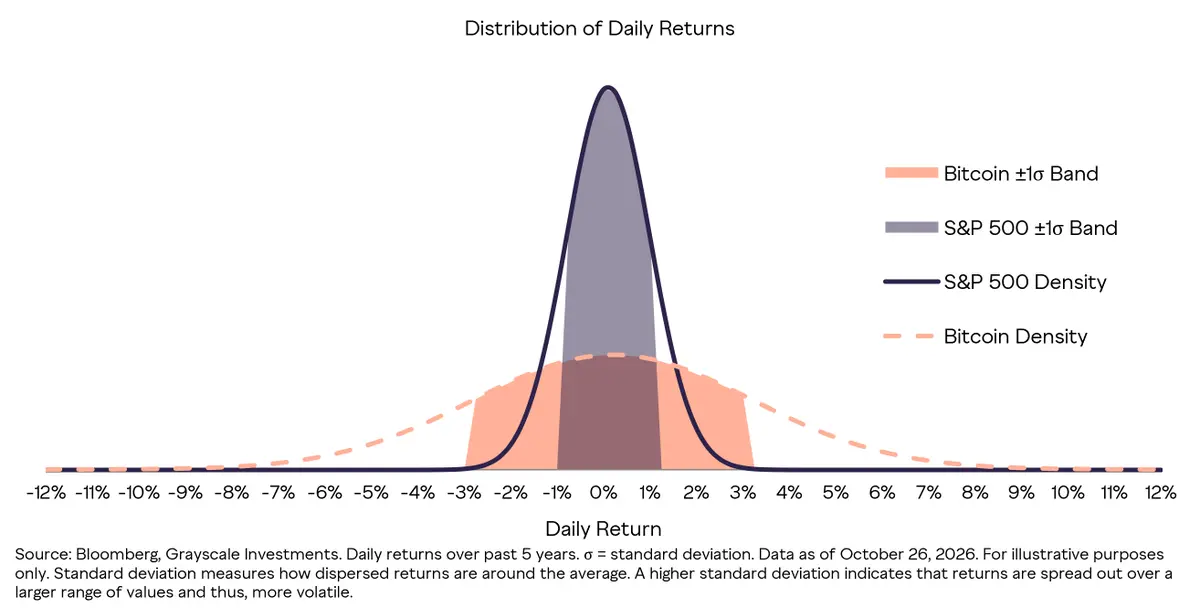
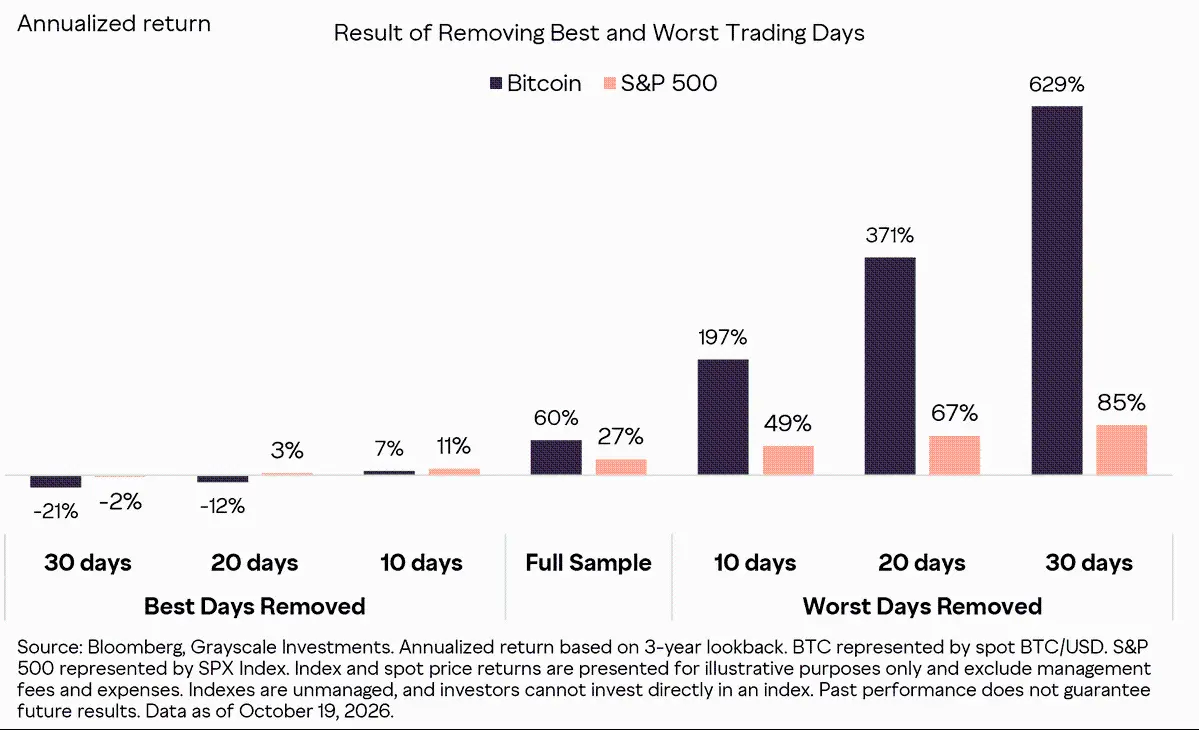
The shape of its returns also matters. Grayscale found that Bitcoin had more extreme daily moves in both directions than the S&P 500. In the three-year period examined, its annualized return was 60%. Removing its 10 best days reduced that figure to 7%; removing its 10 worst days raised it to 197%. Those are retrospective calculations, not days an investor could reliably identify in advance.
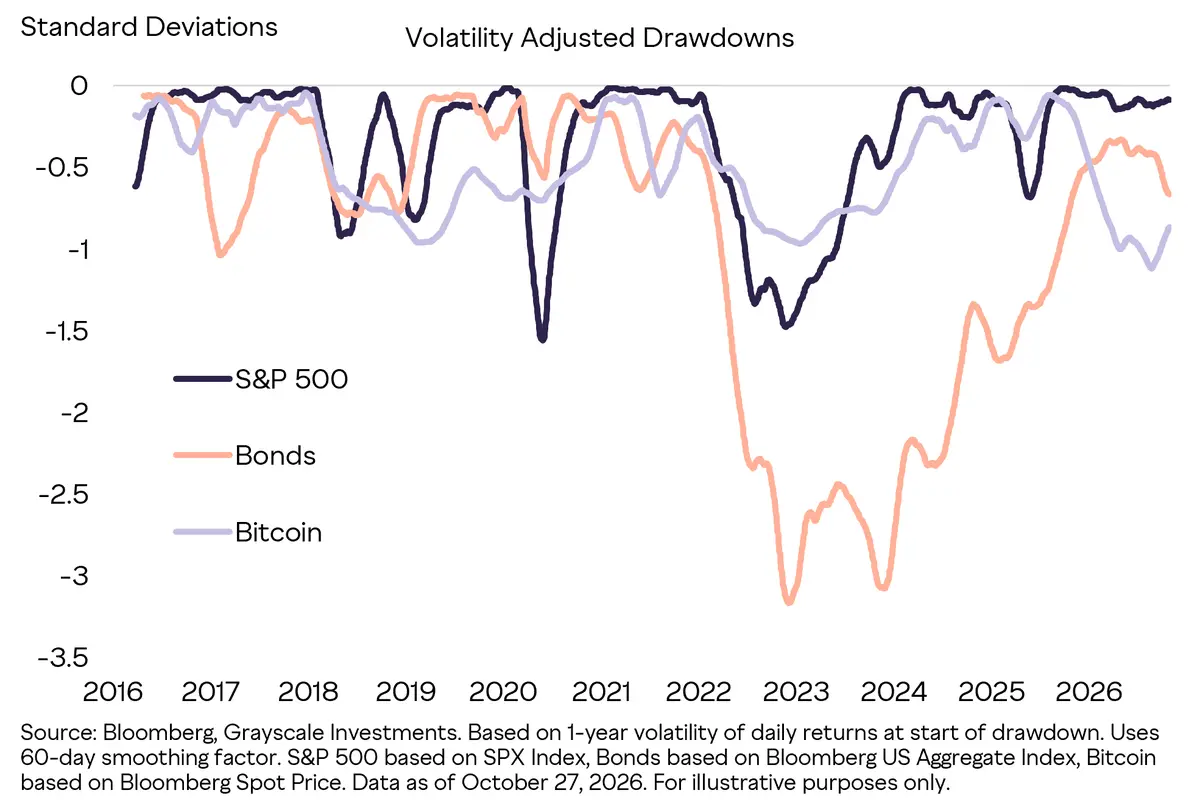
The downside remains substantial. Bitcoin had experienced seven drawdowns of at least 50% since 2011, according to Grayscale’s analysis of Coin Metrics data as of November 3, 2026. Adjusting drawdowns for the volatility prevailing when each decline began made them look more comparable with stock and bond drawdowns in the researchers’ analysis. It did not make the losses smaller for someone holding Bitcoin.
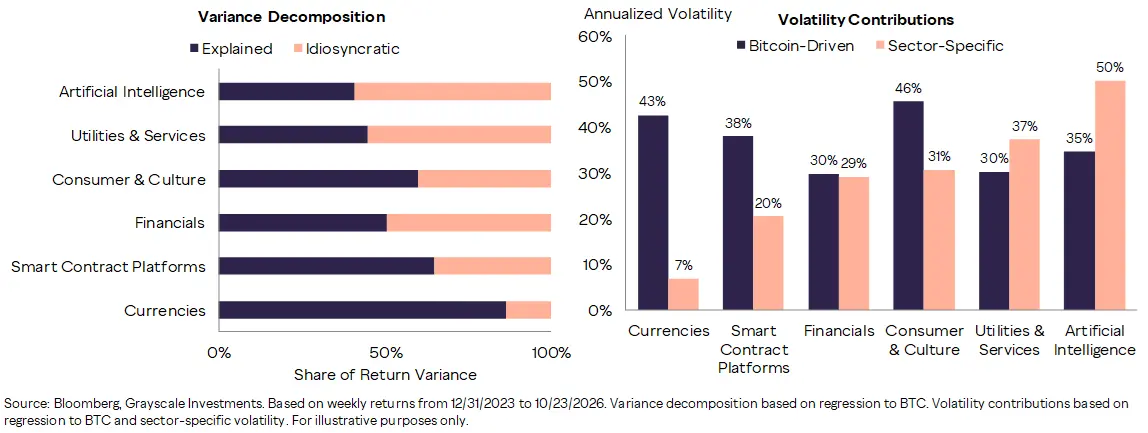
What changes in a portfolio?
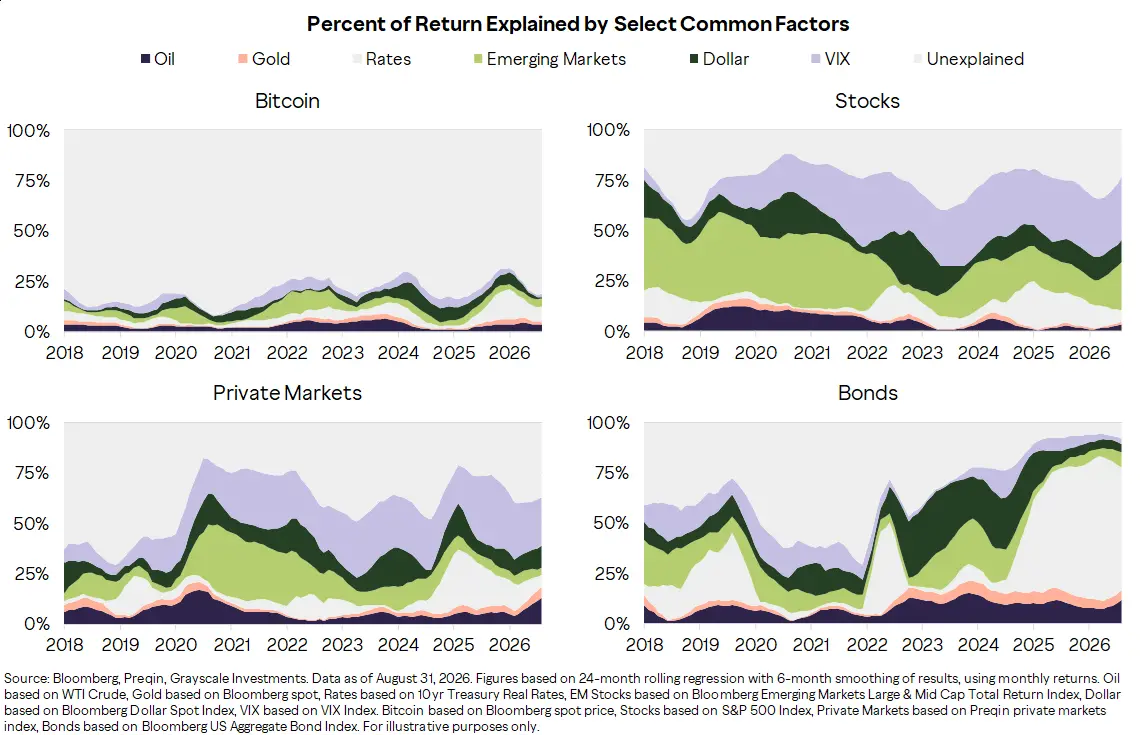
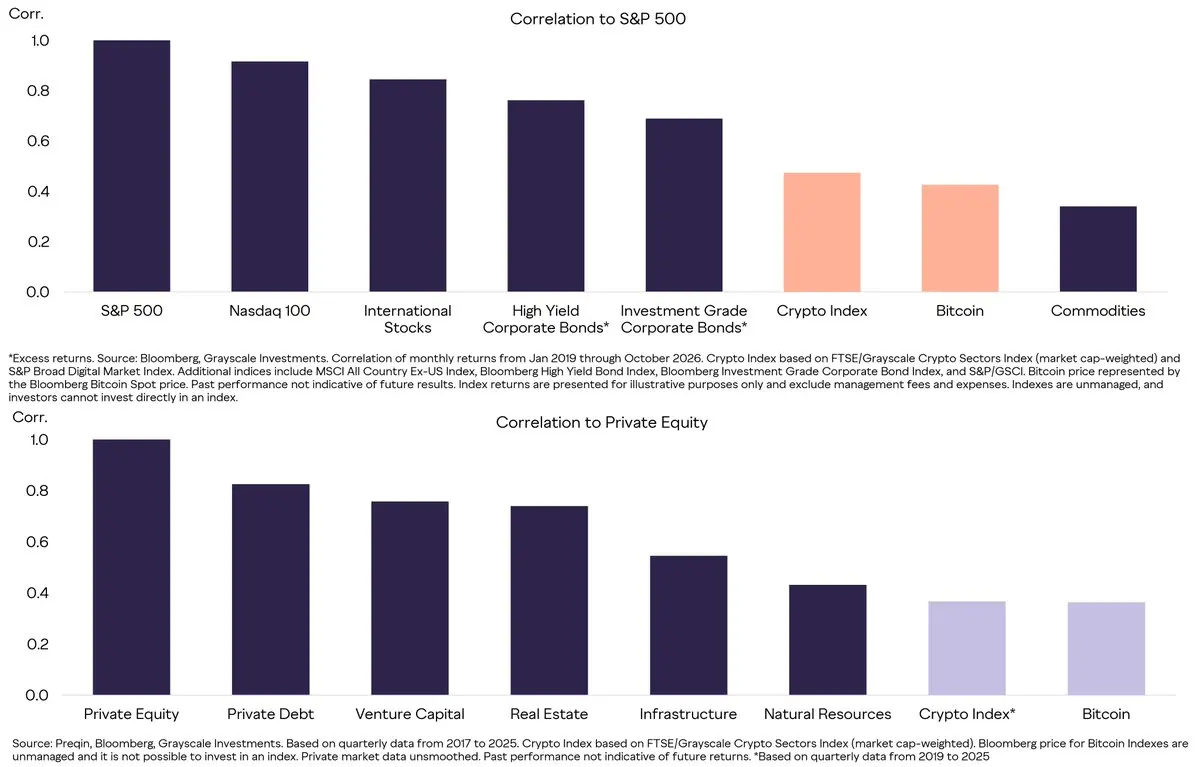
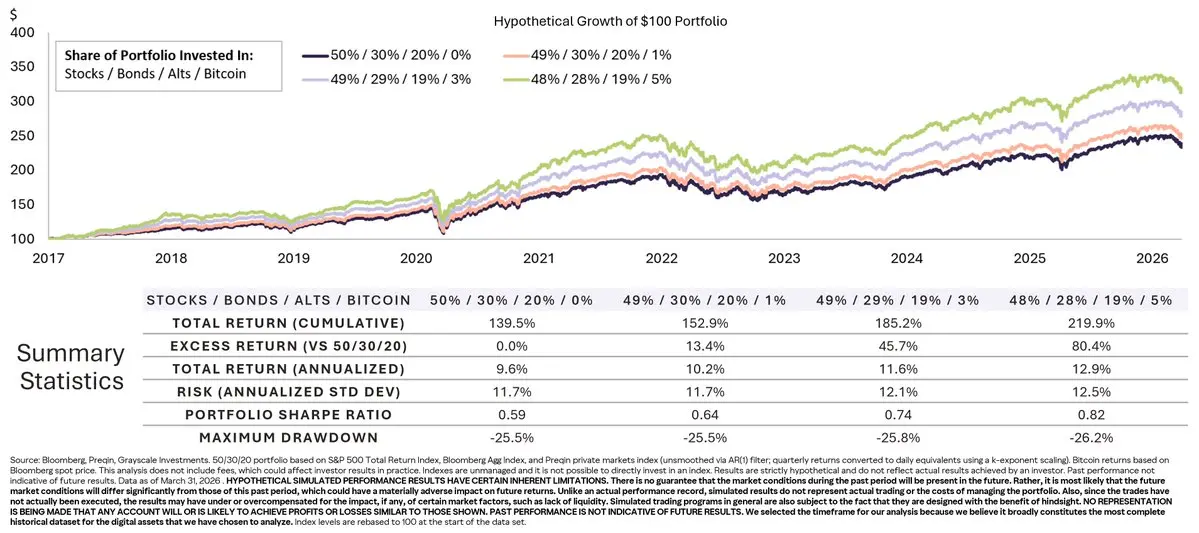
Grayscale’s analysis found that common macroeconomic and market factors explained less of Bitcoin’s historical returns than they did the returns of traditional assets. Its historical portfolio tests also found that modest Bitcoin allocations improved returns and Sharpe ratios in the portfolios shown, with limited effects on overall volatility and maximum drawdown. The report did not establish that those results will recur: the backtests benefited from Bitcoin’s strong performance during the periods examined, and correlations can rise under market stress.
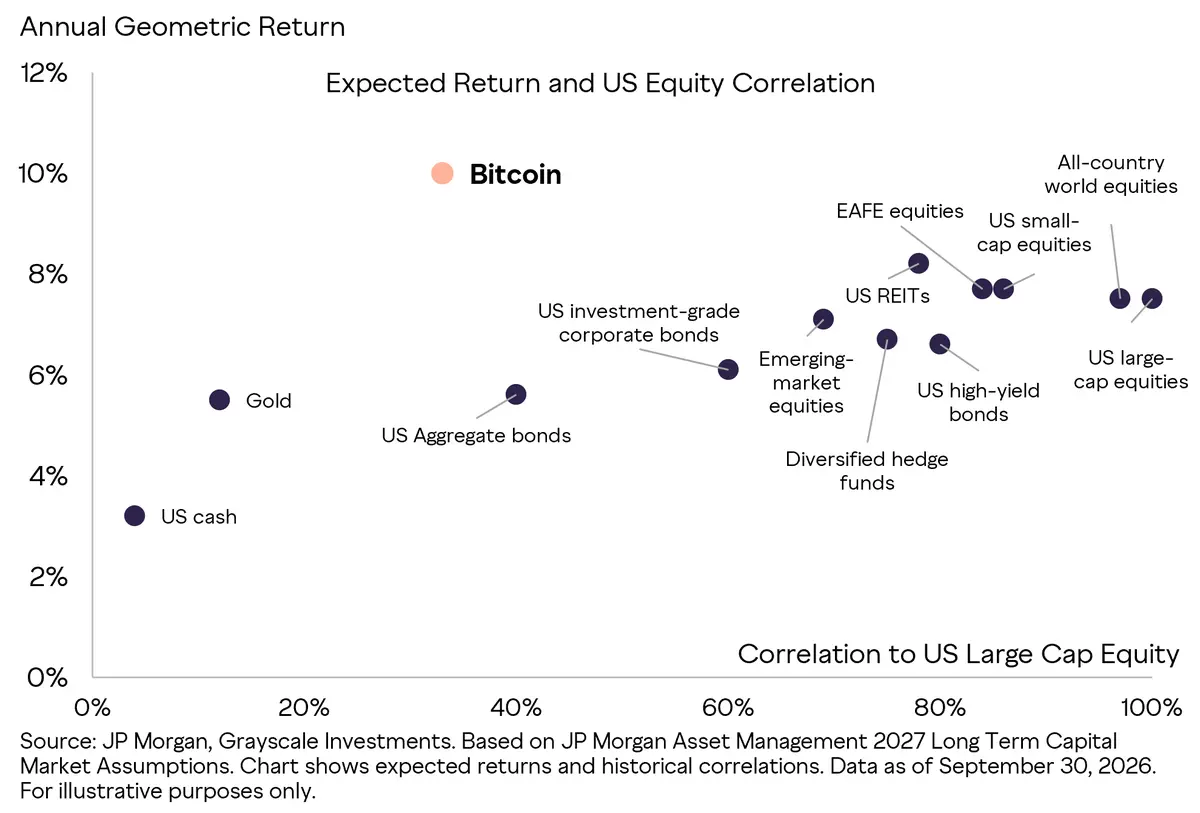
The report also cited J.P. Morgan Asset Management’s 2027 Long-Term Capital Market Assumptions. Those assumptions projected a 10% annual compound return and 55% annualized volatility for Bitcoin over the following decade, with a projected 33% correlation to US large-cap stocks. These are model estimates, not observed future returns.
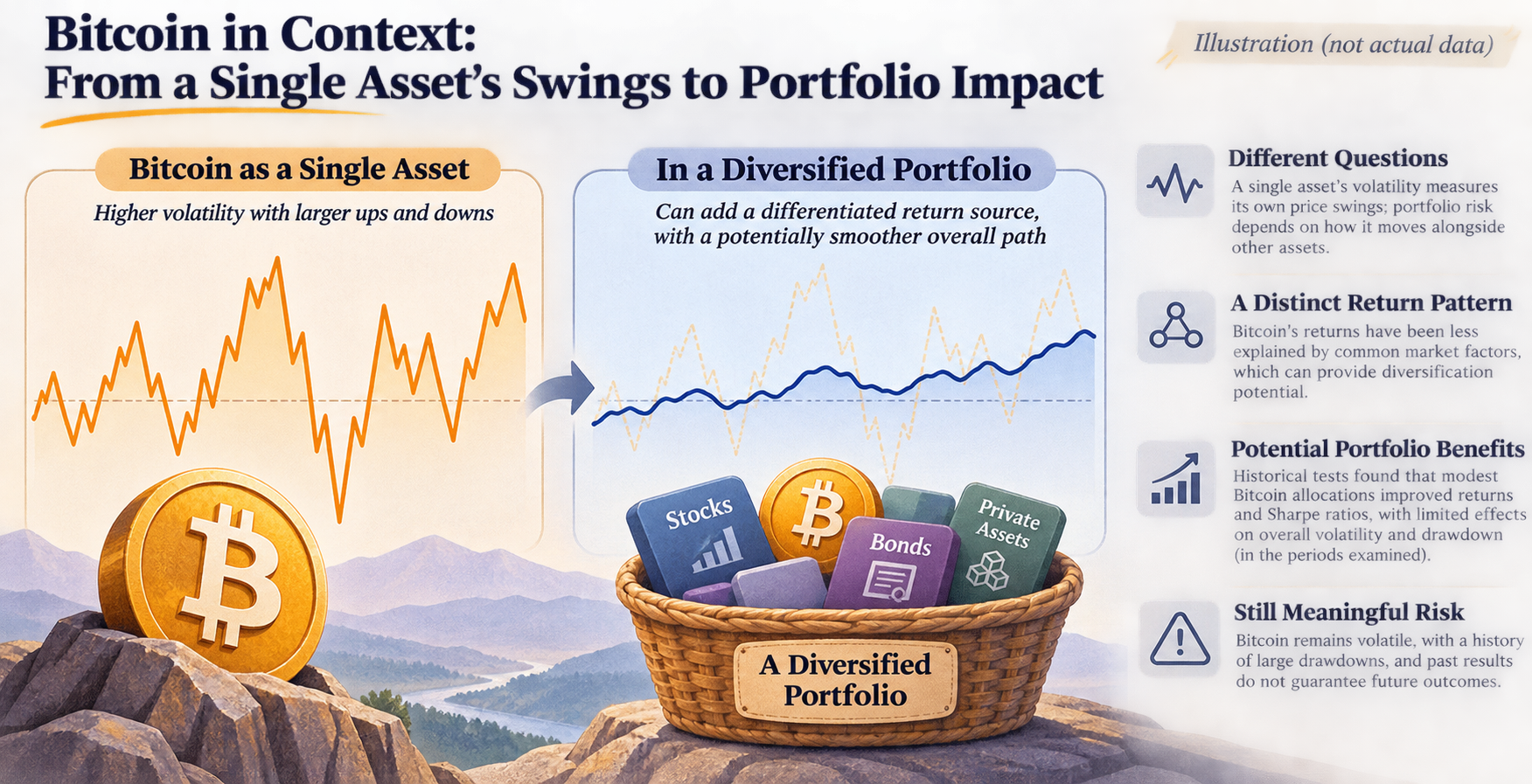
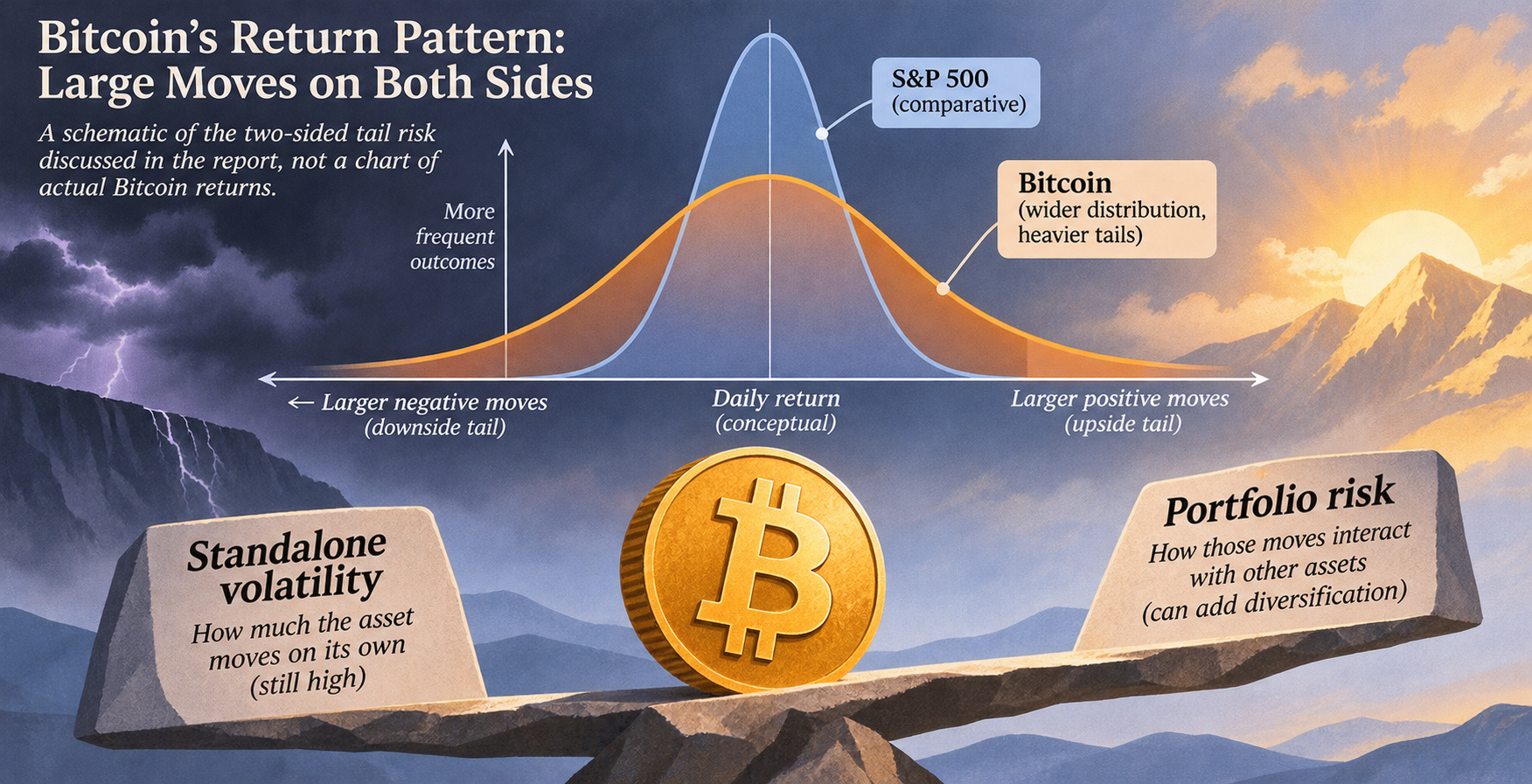
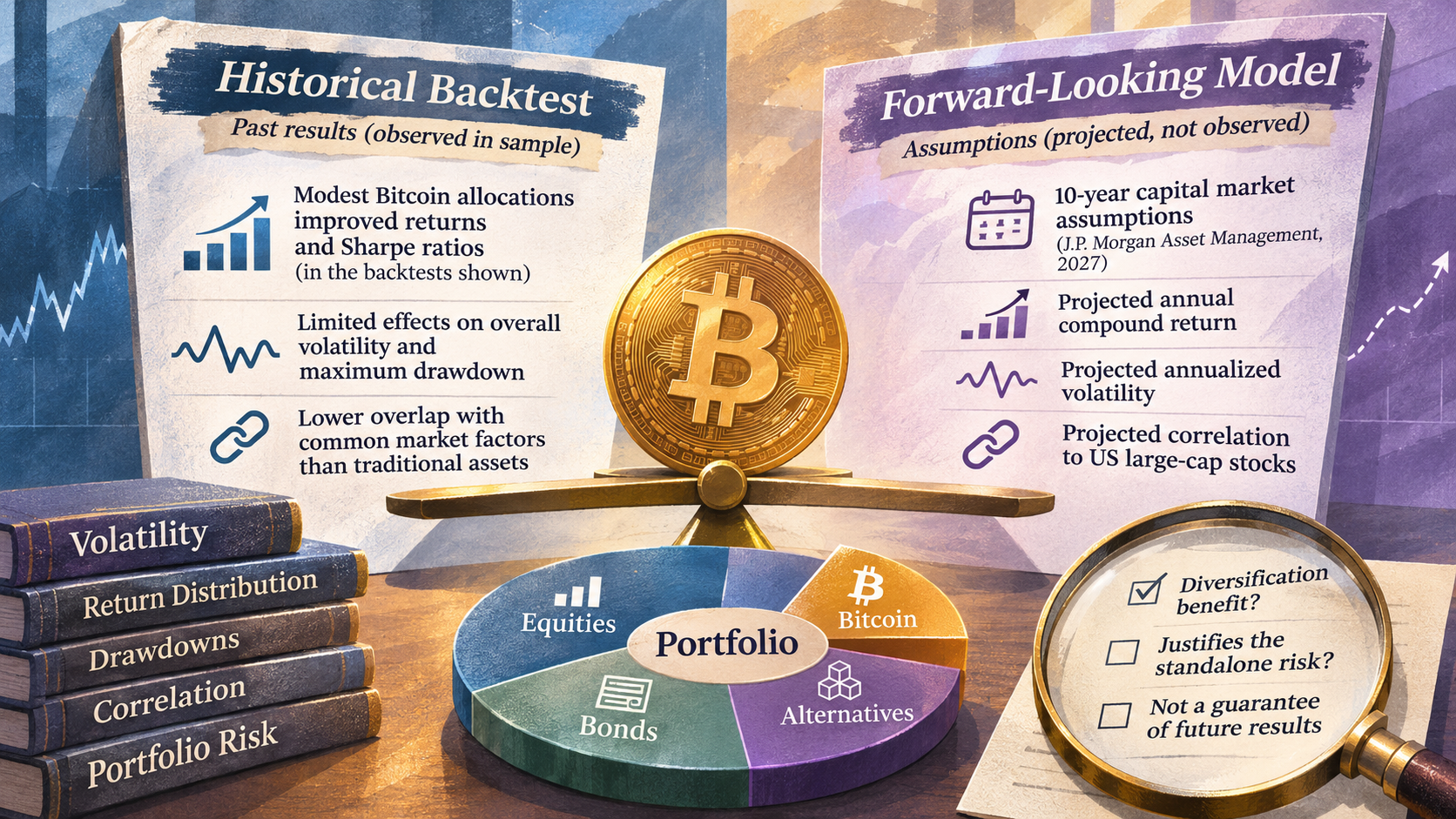
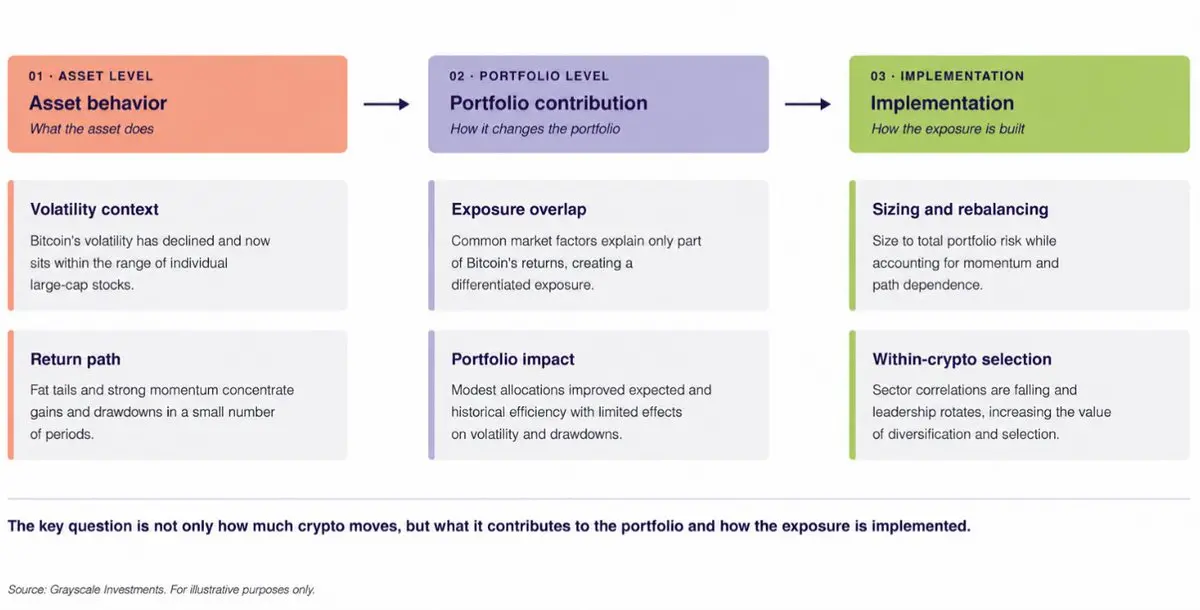
The useful question, then, is not whether Bitcoin has become stable—it has not. It is whether its distinct return pattern adds enough diversification to justify its still-large standalone risk. Grayscale’s historical evidence supports examining that question at the portfolio level, but neither a backtest nor a long-term forecast settles it.