
Originally reported on November 16, 2026, by Lithos.eth; translated and published by Deep Tide TechFlow.
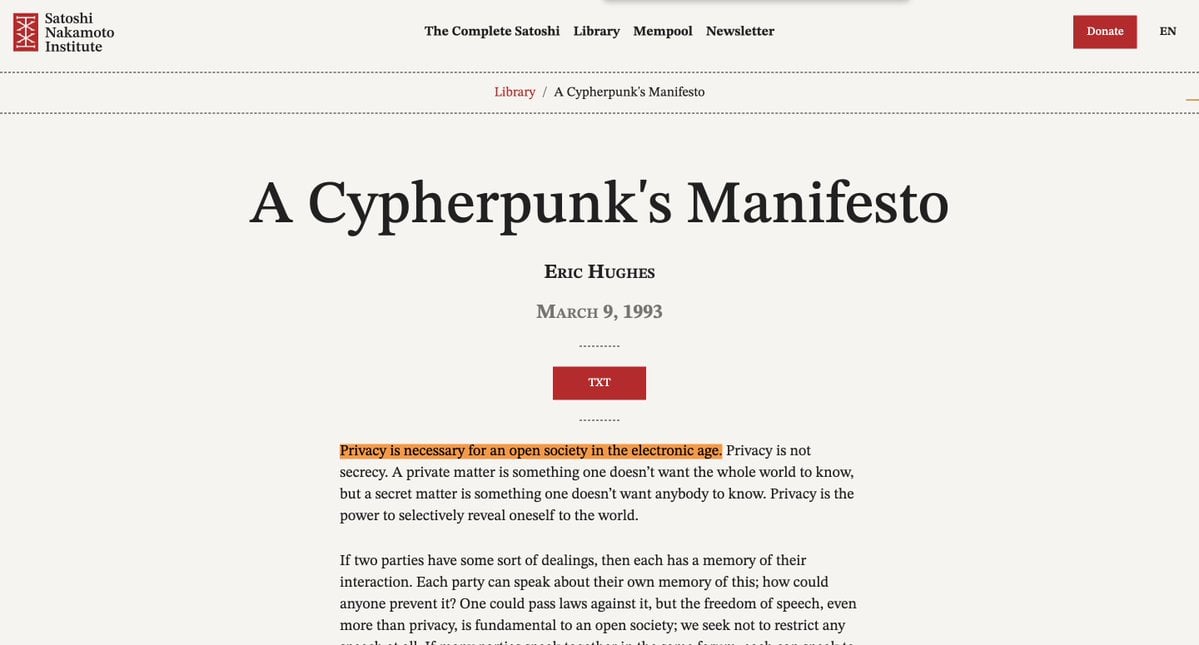
Bitcoin lets anyone verify payments without asking a bank to maintain the authoritative record. The trade-off is that its transaction ledger is public. Bitcoin does not put names on that ledger, but it does reveal information that can sometimes be linked to people.
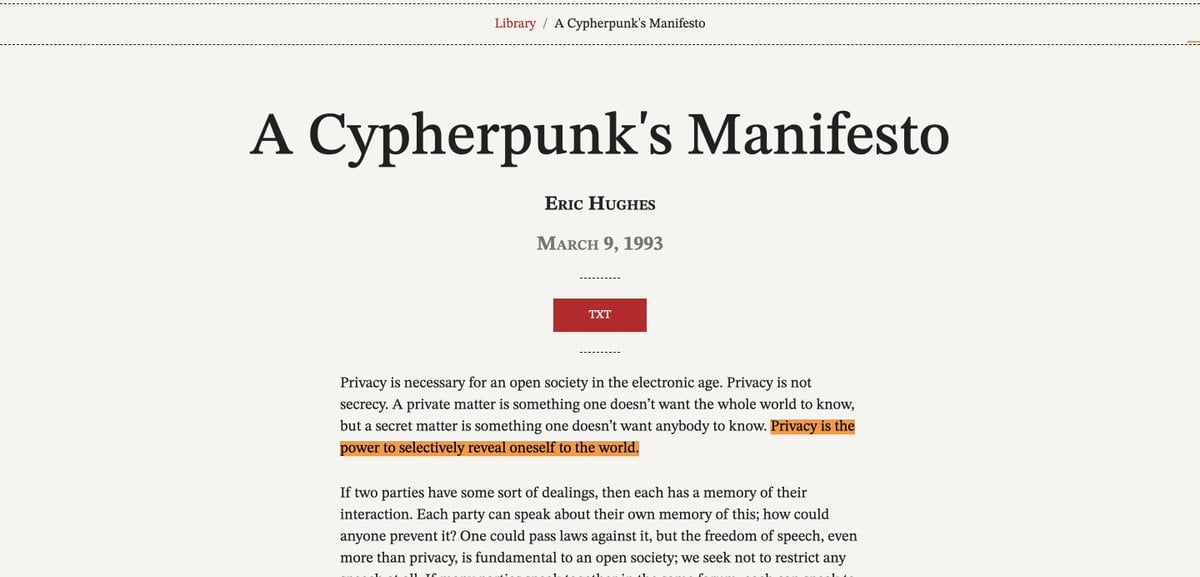
What can an observer see?
A confirmed Bitcoin transaction shows the outputs being spent, the new outputs and their amounts, and the block in which the transaction was confirmed. Its fee can be calculated from the difference between total inputs and outputs.
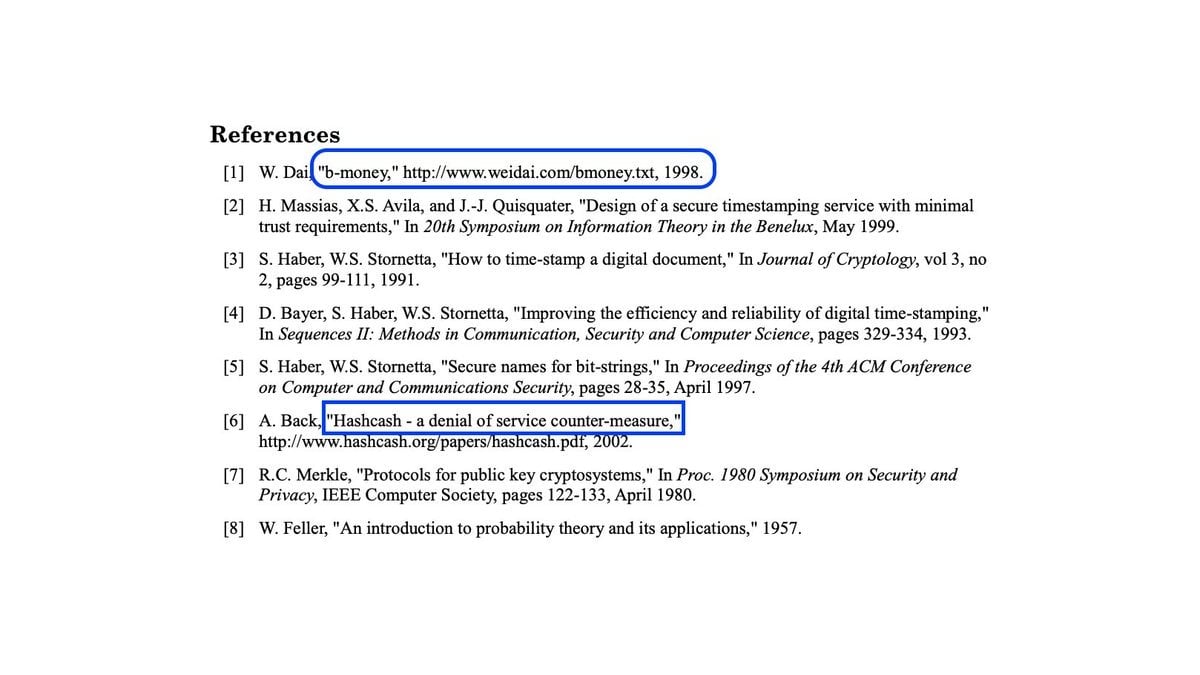
Imagine a payment of 0.5 BTC. An observer can inspect its on-chain details without knowing who paid whom. If an address is later linked to a person—for example, through a publicly posted donation address—those details may become more revealing. Analysts also use clues such as likely change outputs to trace payments, though those inferences are not always right.
What did Satoshi propose?
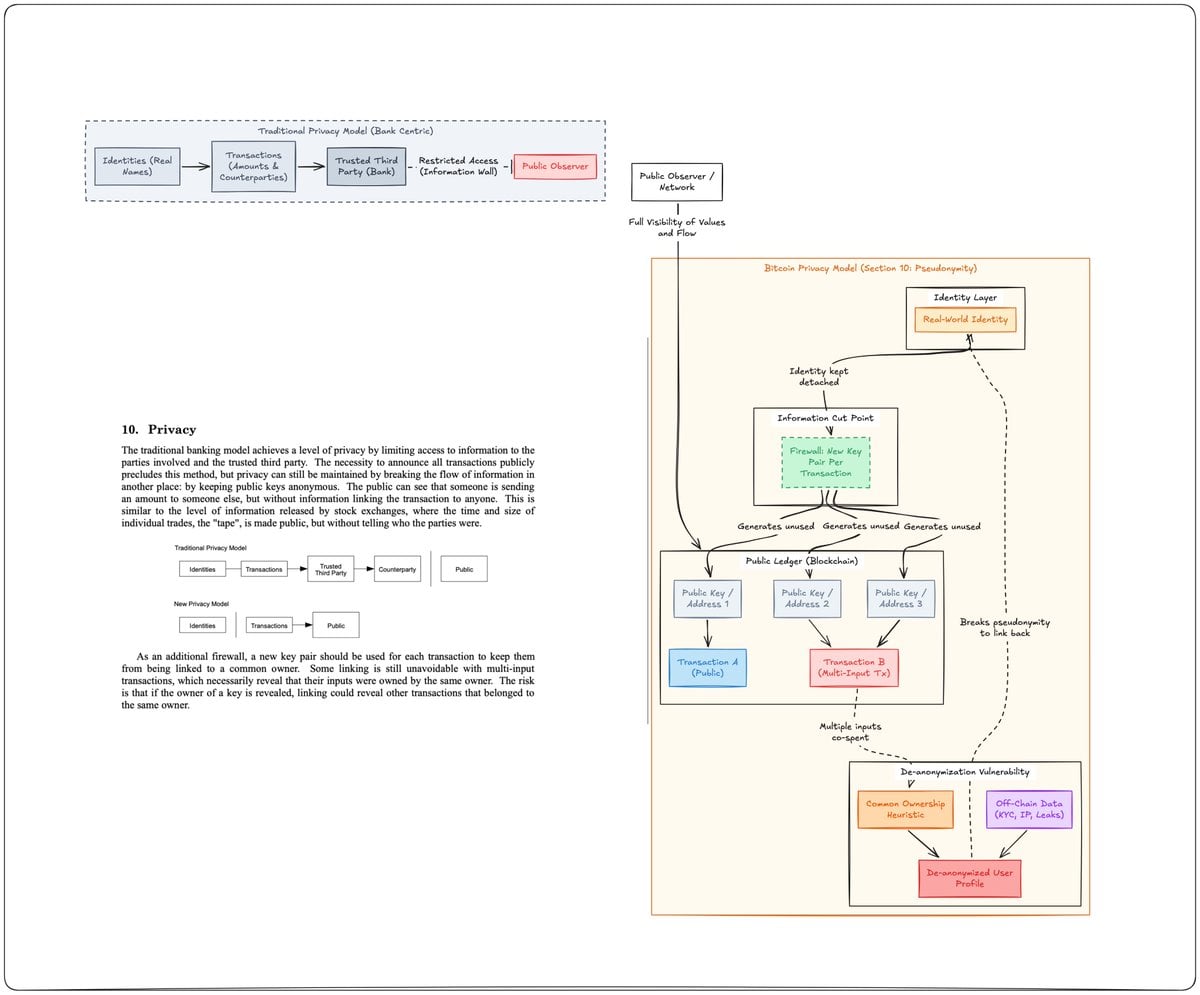
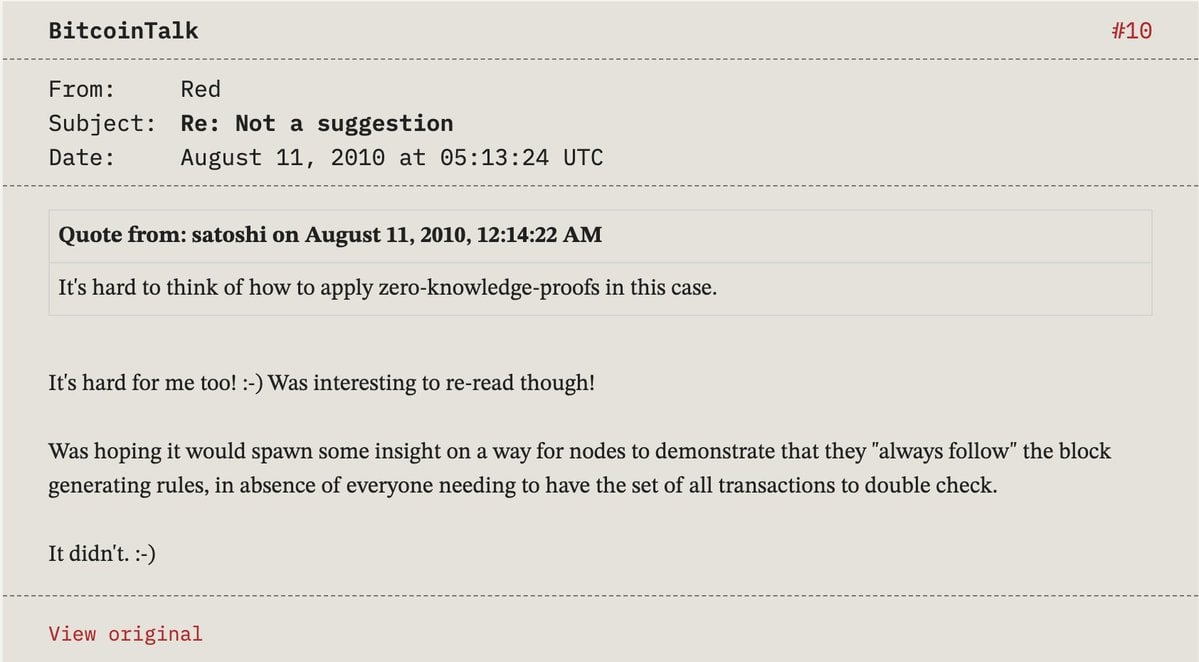
Section 10 of Bitcoin’s 2008 white paper, titled “Privacy,” addresses this problem directly. Satoshi Nakamoto described keeping public keys separate from real-world identities and suggested using a new key pair for each transaction to make payments harder to link.
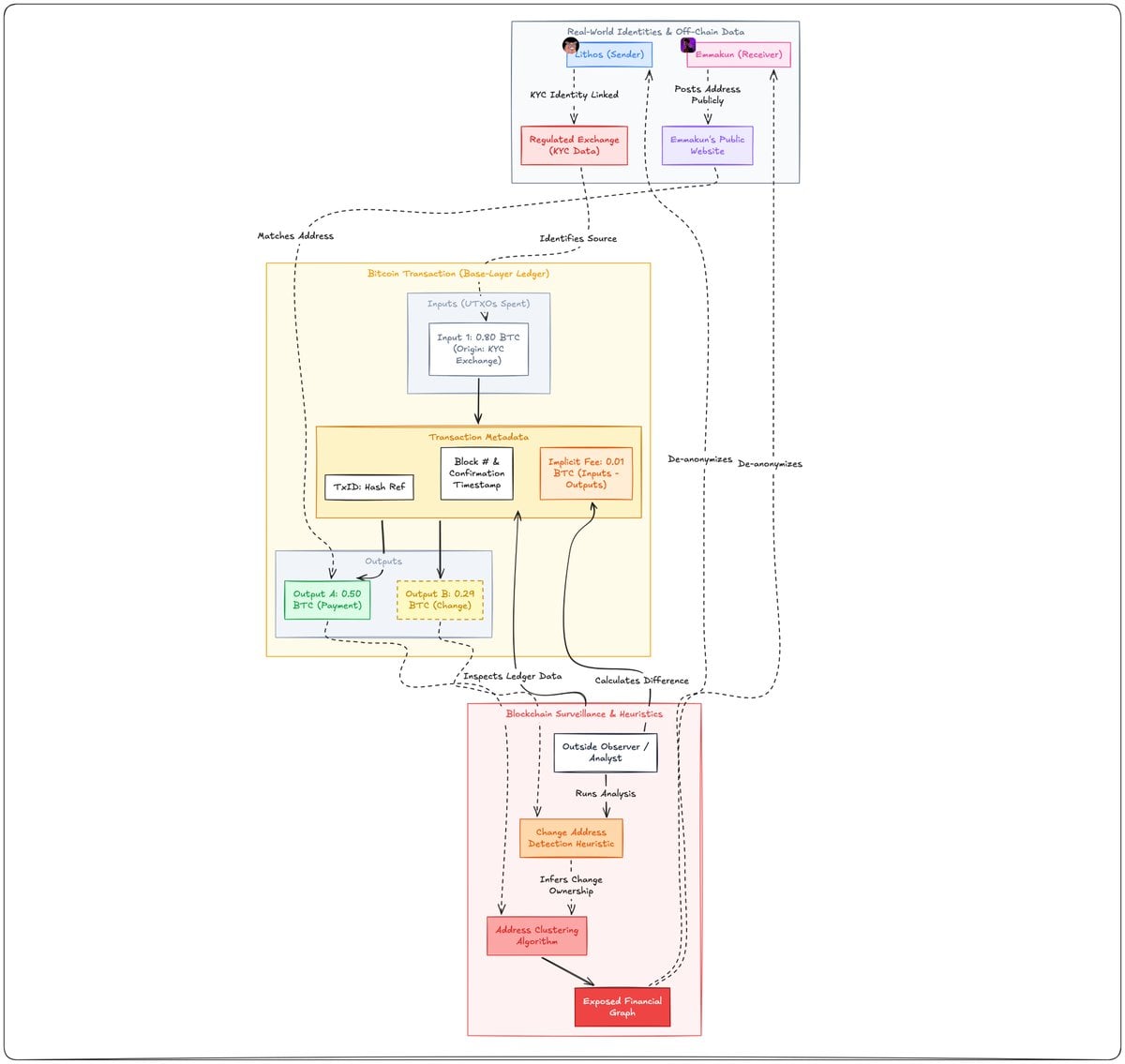
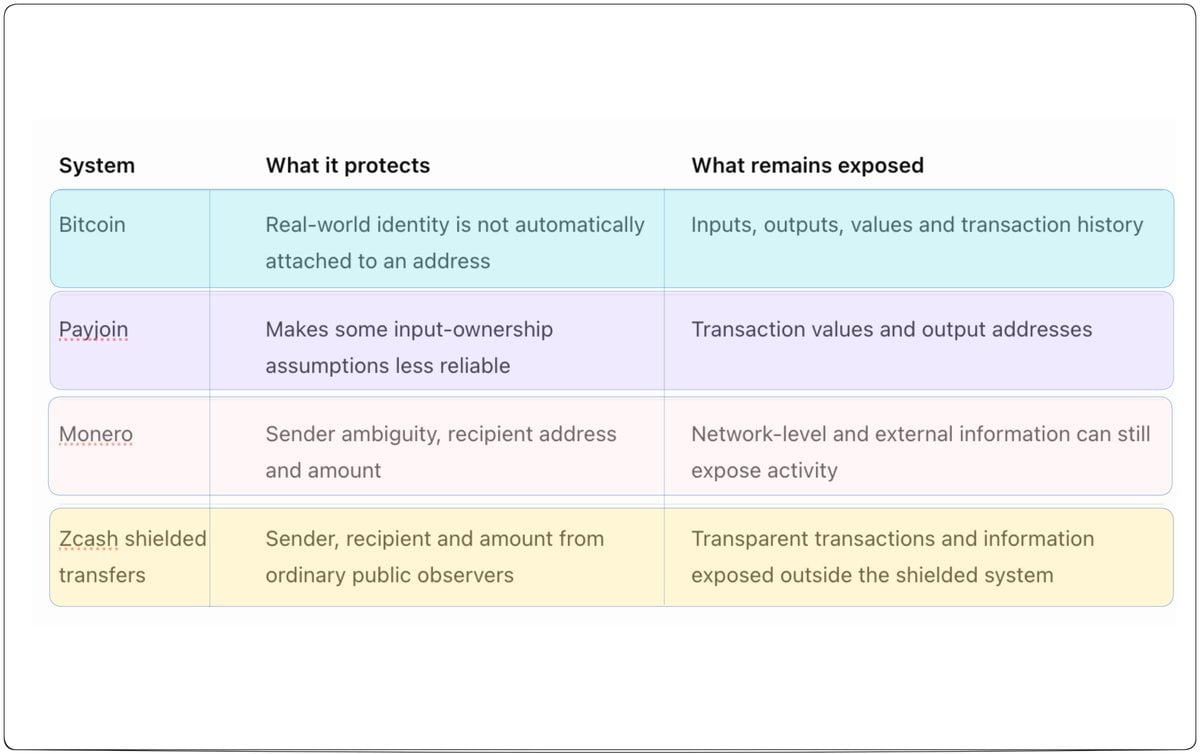
That is pseudonymity, not confidential payment: transaction details remain visible. The white paper also noted that combining multiple inputs can reveal a link between them. That observation is not an infallible rule for every transaction. In a Payjoin transaction, as defined in BIP 78, the recipient contributes an input too, undermining the usual assumption that one person controls every input. Payjoin makes that kind of analysis less reliable; it does not hide amounts or make Bitcoin’s base ledger confidential.
Where does the boundary lie?
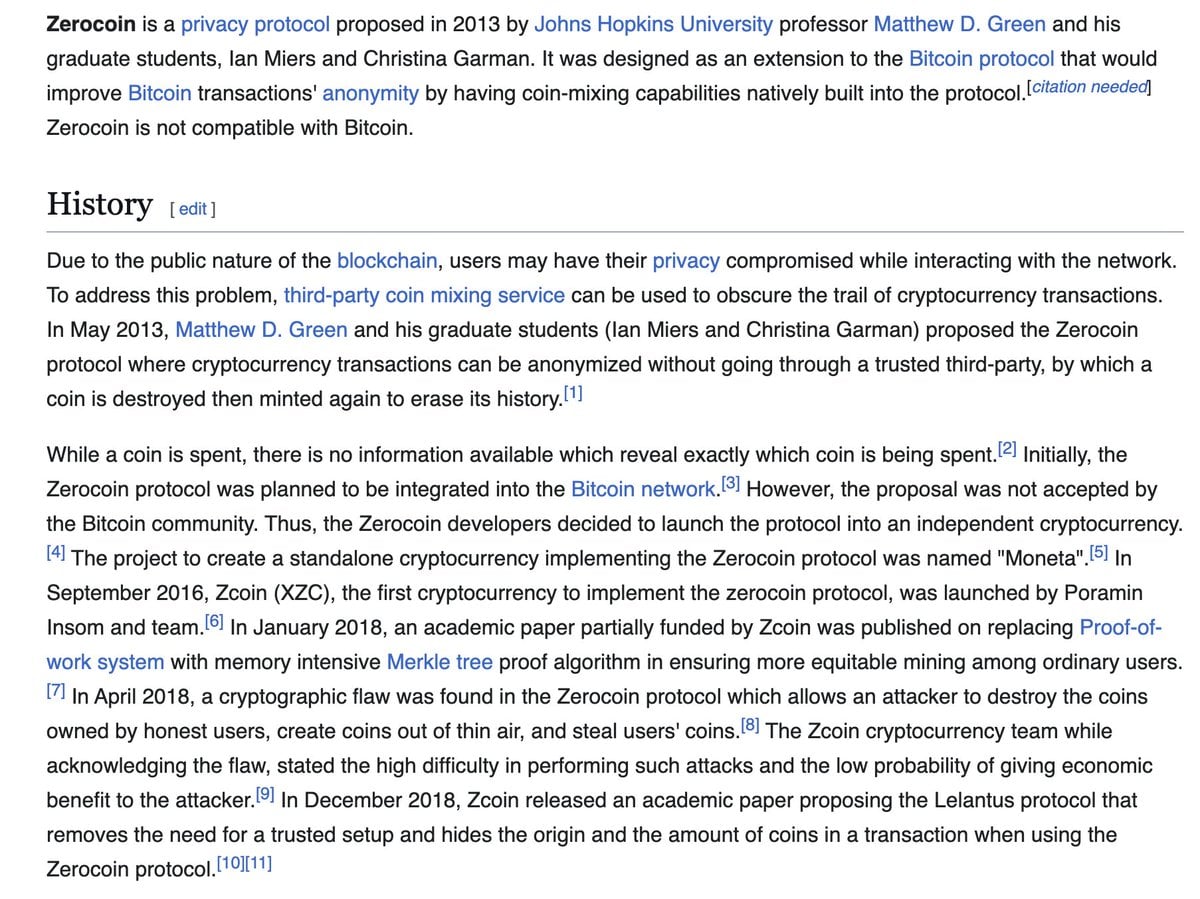
The source contrasts Bitcoin with systems designed to conceal more on-chain payment information, including Monero and Zcash shielded transactions. Those are different designs, not privacy features of Bitcoin. It also points out that protecting ledger data alone does not prevent other leaks: a wallet’s requests to a remote service, for instance, can disclose which account it is checking.
The durable distinction is between verifying a payment and keeping its details private. Bitcoin’s public record supports independent verification, while its native privacy depends in part on whether visible activity can be tied to an identity. Privacy techniques can weaken particular links, but none of the measures discussed here makes every part of a Bitcoin payment private.
Source: techflowpost.com (originally published 2026-11-16 09:29 UTC+8)