The short answer: DWF Labs’ exchange data pointed to heavier active spot selling on Coinbase than on Binance or OKX. It did not establish who placed those trades. A separate 10x Research report described the weekend drop as a cascade of triggered stop-losses, but that is an interpretation of the price action, not proof of a coordinated effort to trigger them.
In a report discussed on November 17, 2026, DWF Labs examined spot cumulative volume delta (CVD)—the value of active buys minus active sells—across three exchanges for November 9–15. It reported −$634 million on Coinbase, −$265 million on Binance and +$118 million on OKX. Coinbase accounted for roughly 80% of the net selling within that three-exchange measure.
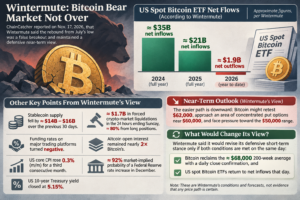
The same account reported five consecutive days of net outflows from U.S. spot Bitcoin ETFs, totaling $1.065 billion for the week, alongside $399 million in Ethereum ETF outflows. It said the outflow streak had reached seven trading days by Friday. The author linked those flows to Coinbase selling and argued that U.S. institutional and ETF-related money was behind much of the decline. The figures show activity in the same direction, but CVD alone cannot identify sellers or prove that ETF flows caused the Coinbase trades.
10x Research characterized the weekend decline as having the features of a “stop-loss hunt.” It said the move reached the area where Bitcoin’s August rebound began and cleared nearly all long positions with stop-losses opened since August. The account also cited $5.77 billion in market-wide liquidations during the period, including $4.69 billion in long positions—about 81% of the total. 10x pointed to thinner weekend liquidity and difficulty adding margin through bank transfers as factors that could amplify the move.
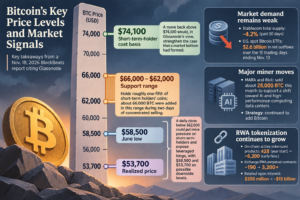
The reports did not establish a bottom. DWF described $58,000–$62,000 as a next support reference after the weekly loss of $68,000; 10x called $62,000–$63,000 a possible base for the year while noting continued selling by large holders and no turn in its trend model. The author also raised a possible December Federal Reserve rate increase as a risk, citing remarks attributed to Collins about further tightening. That was a scenario, not an announced rate decision.
The useful distinction is between where selling appeared in the measured data and who ultimately sold. The first has reported figures behind it; the second remains an inference.