In a market report published on November 17, 2026, Wintermute argued that higher interest-rate expectations and weakening inflows were weighing on Bitcoin at the same time. Its conclusion was a short-term market view, not a settled account of what would happen next.
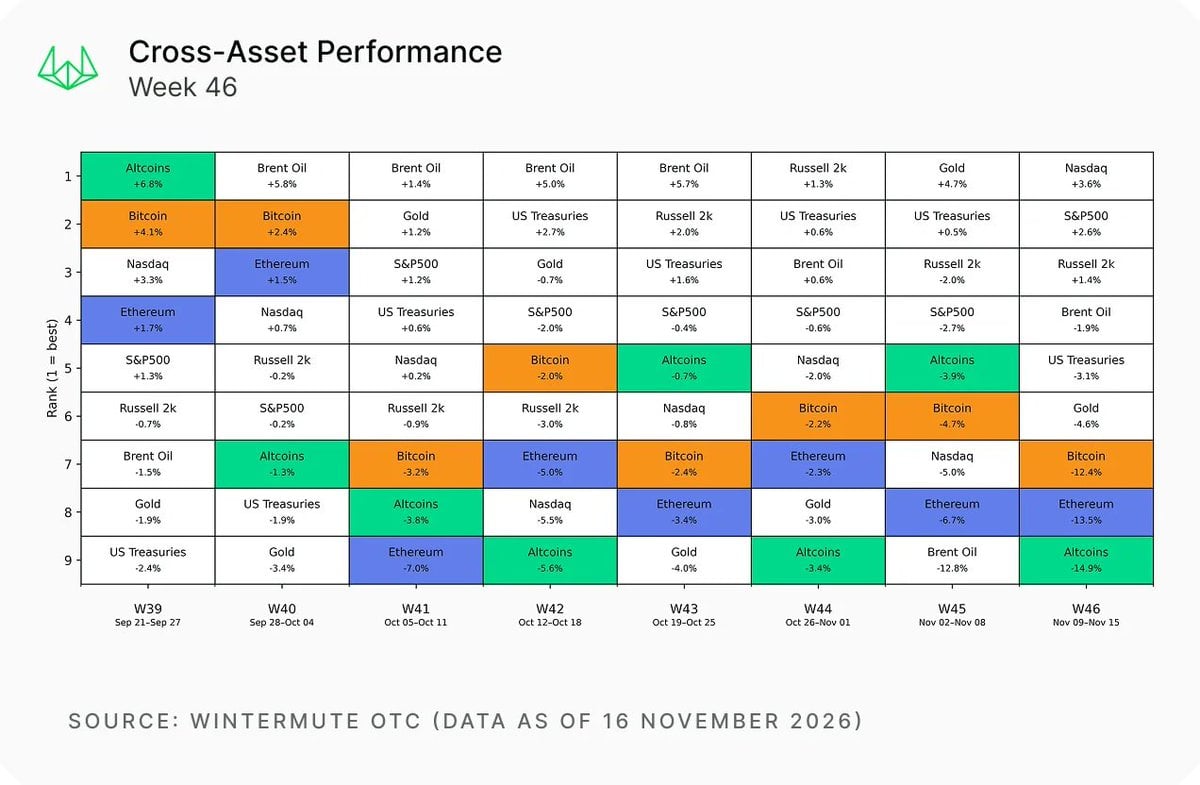
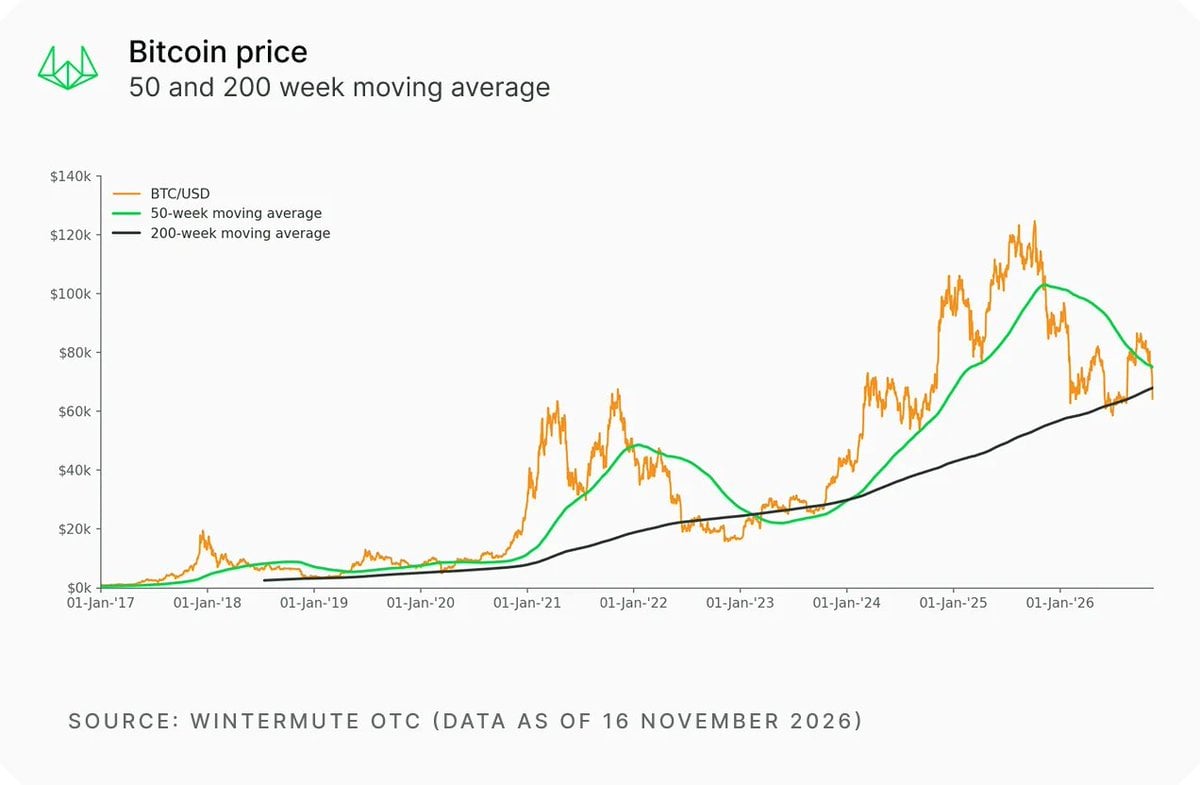
Bitcoin fell 12.7% over the week to about $65,400, according to the report. Wintermute said it closed below its 200-week moving average, near $68,000, and reached $62,000 on Saturday. Over the same week, the US 10-year Treasury yield rose about 30 basis points to 5.15%. Wintermute described the sell-off as part of a broader repricing of assets that do not produce income: when bond yields rise, holding a non-yielding asset such as Bitcoin can look less attractive.
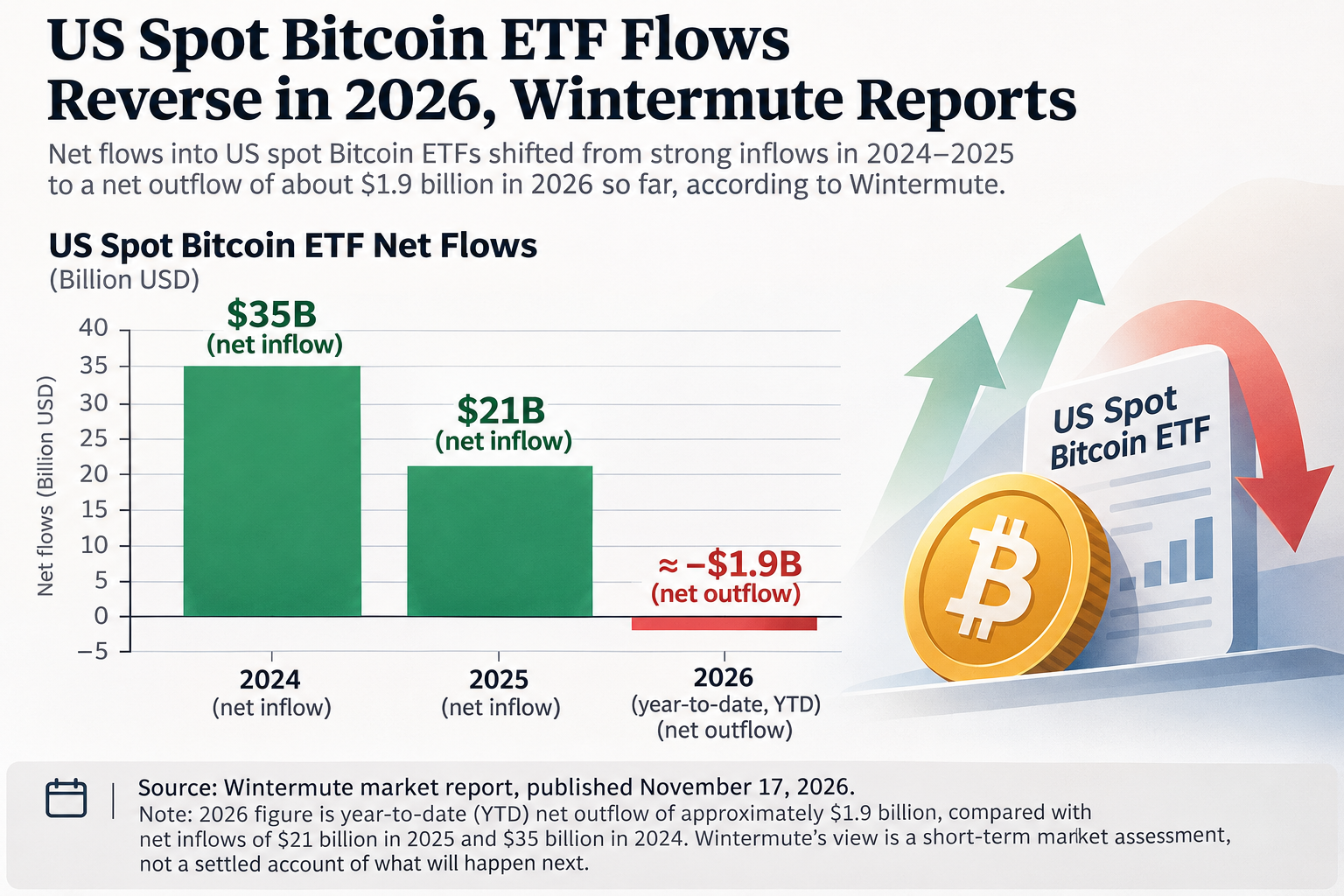
Wintermute also pointed to weaker sources of crypto-market funding. It reported roughly $1.9 billion in net outflows from US spot Bitcoin ETFs so far in 2026, compared with net inflows of $21 billion in 2025 and $35 billion in 2024. It estimated that stablecoin supply had fallen by $14 billion to $16 billion over the preceding 30 days. Those measures informed its view that the latest rebound did not yet show a durable return of buyers.

The 200-week average is a reference point, not a rule that determines Bitcoin’s value. Wintermute said it would reconsider its defensive short-term stance if Bitcoin reclaimed that level on a daily close alongside clear spot ETF inflows, or if forthcoming US inflation data or Federal Reserve minutes dispelled expectations of another January rate increase. Its forecast of a further fall toward the $50,000s remained a forecast, dependent on how rates and funding flows developed.