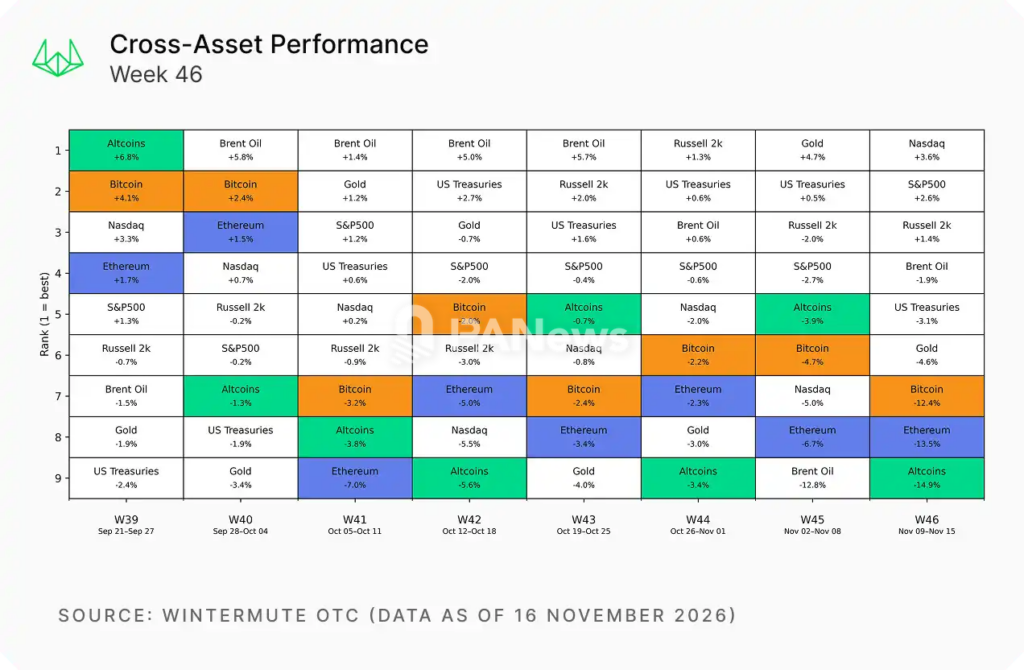
In an analysis published on November 18, 2026, Wintermute argued that Bitcoin’s rebound from its July low had failed. Its case was not based on price alone: the firm pointed to weakening fund flows and rising interest rates as reasons the market could remain under pressure.
Wintermute reported that Bitcoin had fallen 12.7% over the preceding week to $65,400 and had closed below its 200-week moving average, then near $68,000. It said US spot Bitcoin ETFs had recorded about $1.9 billion in net outflows so far in 2026, after net inflows of about $35 billion in 2024 and $21 billion in 2025. It also estimated that stablecoin supply had fallen by $14 billion to $16 billion over the previous 30 days.
The macroeconomic backdrop mattered to its assessment. Wintermute cited a US 10-year Treasury yield of 5.15% and three consecutive monthly increases of 0.3% in core CPI. Its interpretation was that higher rates were putting pressure on risk assets, including Bitcoin, which pays no yield.
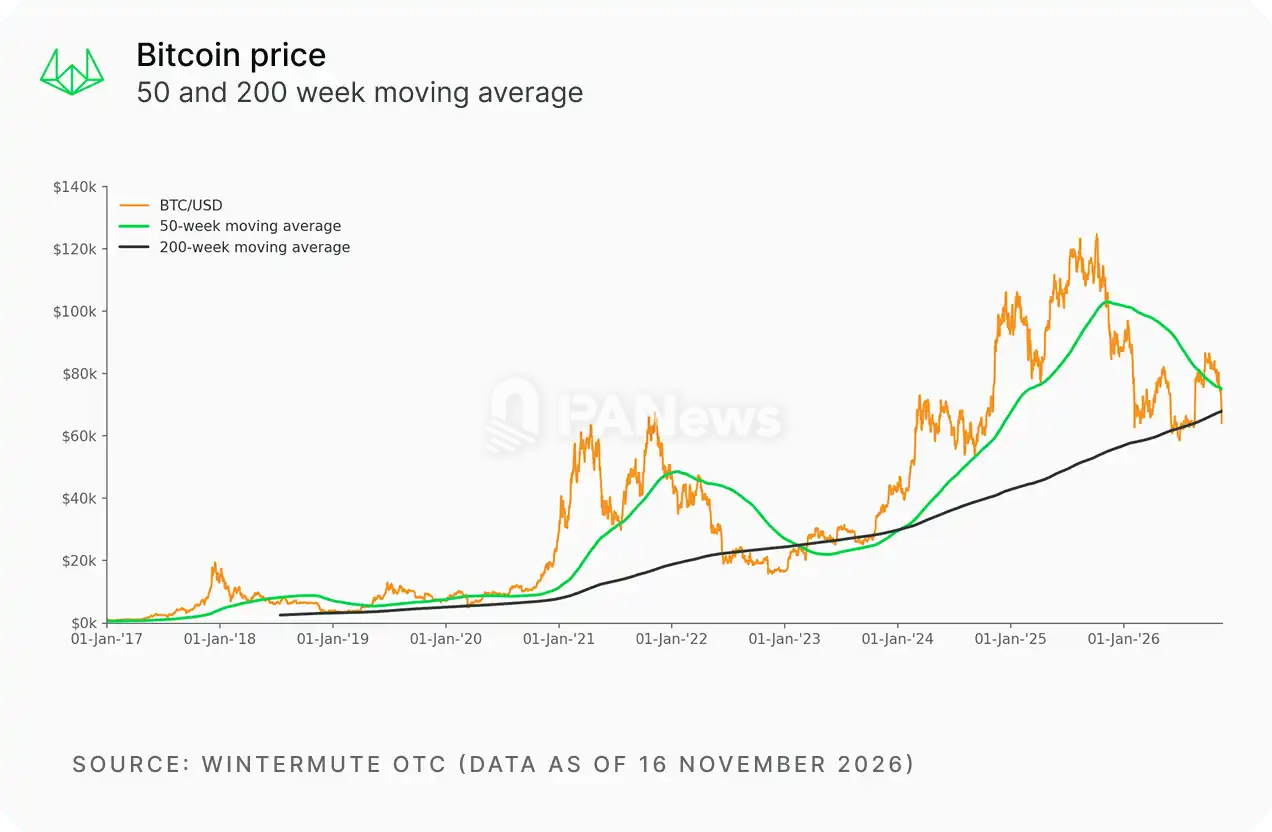
Wintermute did not treat a reported $1.7 billion in crypto liquidations over 24 hours—about 80% of them long positions—as proof of a bottom. It said a subsequent rebound could reflect short covering rather than new capital entering the market. The firm saw $62,000 as an initial level to watch and $60,000 as an area with concentrated Deribit put-option positions; it considered a move toward the $50,000 range possible, not certain.
What would challenge that short-term view? Wintermute specified a daily close back above roughly $68,000 alongside renewed spot ETF net inflows, or inflation and Federal Reserve signals that eased expectations of further rate increases. It also distinguished its long-term confidence in Bitcoin from a claim that the near-term decline was over. These were conditions for reassessing its forecast, not evidence that any price level would hold.