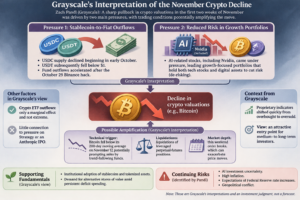
As reported on November 20, 2026, Bitcoin, stocks, gold, copper and commodity-linked currencies were falling while measures of expected market volatility were rising. The move was not confined to Bitcoin.
The Volmex Bitcoin volatility index stood at 52.2, up 23% so far in November and 40% for the quarter. The S&P 500’s 30-day implied volatility index, VIX, reached 29.5—its highest level since March—after rising 52% for the month and 81% for the quarter. The gold volatility index reached 28.7, up 10% and 21% over those same periods.
These indexes measure volatility expected by options markets, not losses already realized. They often rise when demand for protection grows. The report also noted earlier pressure in other markets: from July through September, the MOVE index of US Treasury volatility rose 54%, while an oil volatility index rose 21%.
CoinDesk reported that US spot Bitcoin ETFs recorded more than $580 million in net outflows on Thursday, November 19, bringing November’s net outflows to $3.47 billion at the time. It also said an expectation that funds would return to Bitcoin after an Anthropic listing had not materialized.
The weekend outlook remained conditional. CoinDesk suggested that, if risk aversion persisted while traditional markets were closed, round-the-clock crypto markets could face more selling pressure; trading in traditional-asset perpetual contracts on platforms such as Hyperliquid might offer an early indication of sentiment. A softer Federal Reserve signal could instead ease expectations of further rate increases and pressure on the dollar. Neither possibility was a forecast established by the volatility readings.